Houston industrial AI consulting: sell decision support before touching the control system
Houston-focused guide to launching industrial AI consulting around decision support, human approval, and cautious pilots without touching control systems.
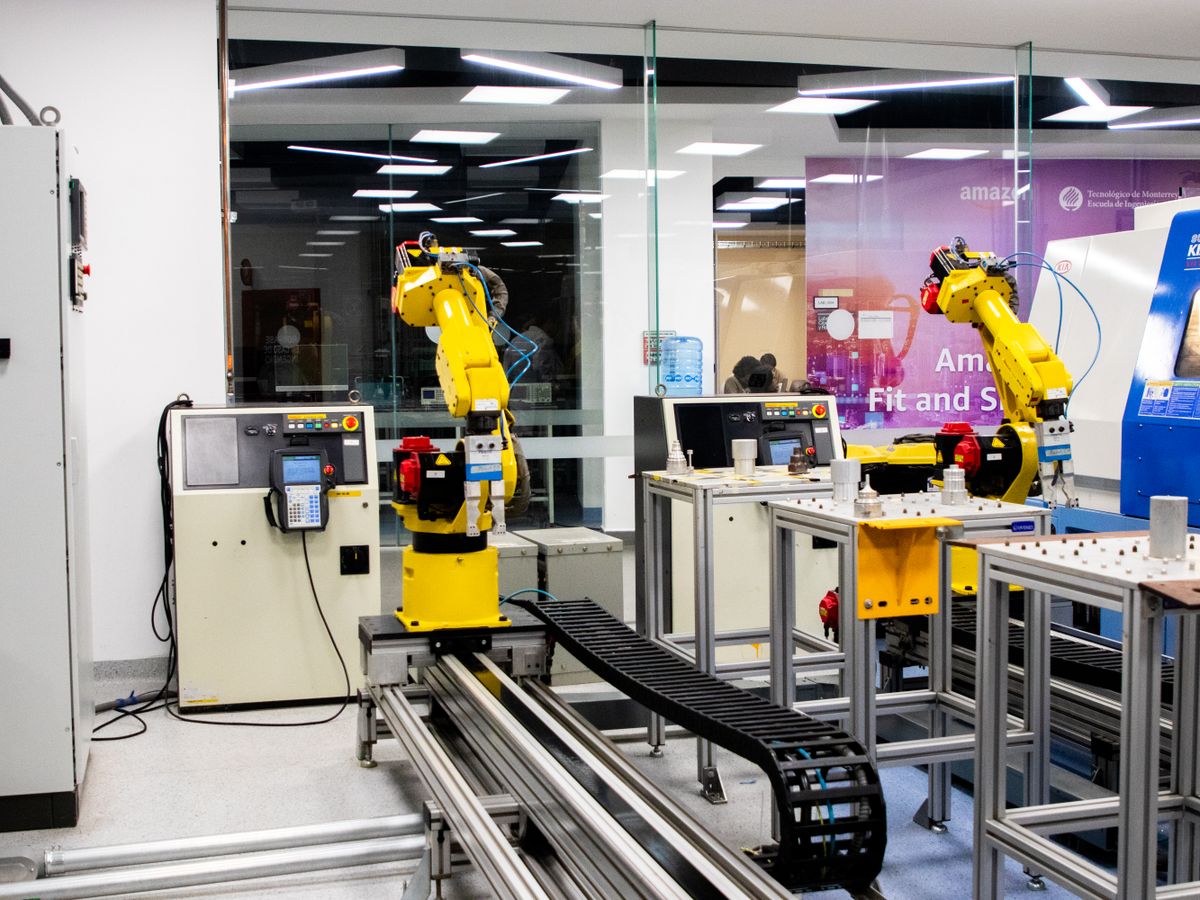
Illustrative editorial photograph · Pexels. Not a photograph of a marketplace listing.
An industrial AI consultant may need an extended Houston engagement for approved process observation, evaluation and user training. The opportunity connects to monthly living through that personal assignment, not through permission to connect home equipment to an industrial control system.
The safest way to enter Houston industrial AI is to sell decision support, not autonomy. In plants, terminals, and service yards, the buyer usually wants faster triage, clearer alarms, better maintenance prioritization, or cleaner shift handoffs long before anyone is ready to let software touch a control system. That distinction matters in Houston because the city’s energy and industrial base creates real demand for operational intelligence, while the risk tolerance for direct control changes stays low until a team has earned trust through a disciplined pilot with human approval.
A Houston home while an industrial AI pilot stays supervised
Choose a base around the actual customer and authorized site locations. Confirm ordinary living, parking and internet needs, while keeping sensitive operational data, experiments and customer meetings within the settings approved for the engagement. Month ‘n’ More helps you find furnished monthly stays and contact owners about the actual home and your dates; it does not place workers or award business contracts.
Owners should describe truthful household features without advertising a secure industrial workspace, energy-company endorsement or guaranteed consulting assignments. If the home is suitable, list a furnished monthly property on Month ‘n’ More and describe only what you can genuinely offer. This is a possible use case to evaluate, not measured or guaranteed rental demand.
Houston industrial AI consulting starts with the buyer’s appetite for risk
For this kind of consulting, the first commercial question is not “Can the model predict something?” It is “Who will trust the recommendation, and under what approval step?” In Houston, that may be a reliability manager, process engineer, operations superintendent, or asset-performance group at an industrial operator. Their threshold is different from a software buyer’s because a bad recommendation can create downtime, safety exposure, or unnecessary intervention. Your service therefore needs to be framed as industrial AI decision support: anomaly detection, work-order prioritization, operator briefing summaries, inspection triage, or spare-parts forecasting. The control system stays outside the scope until the client has validated the advisory layer and documented the human approval workflow.
Recent activity in the city shows why that lane is plausible. Rice and the Ion District continue to back AI-forward work, and Persona AI’s 2025 expansion at the Ion signaled that industrial, AI-driven robotics companies are being built in the heart of Houston. That does not prove every consulting niche is funded, but it does show that local institutions are reinforcing an ecosystem where industrial tech can be developed, tested, and talked about in business terms. See the Ion District’s announcement at Persona AI expands in the Ion as Rice and Ion District support growth of AI innovation and Rice’s coverage at Rice News on Persona AI’s expansion and the Ion District.
Why Houston matters: industrial density, not generic tech buzz
Houston is relevant because the work is close to the asset classes that produce operational data: energy infrastructure, advanced manufacturing, logistics, maintenance services, and engineering firms. The local context in the excerpts matters in three concrete ways. First, the Ion District is described as a 16-acre innovation community and economic engine, which matters because consulting businesses benefit from adjacency to founders, corporate innovators, and technology buyers who can share vocabulary and evaluation habits. Second, the Ion District is home to over 300 businesses, which signals a concentrated customer and referral environment, even if none of those firms is automatically a buyer for your service. Third, TXRX Labs’ move from the Ion Prototyping Lab to the East End Maker Hub, while maintaining a network between sites, suggests that Houston’s innovation geography is spread across neighborhoods rather than locked into one tower. That affects where you meet clients, where you test prototypes, and where you may temporarily live if your work requires quick access to both the Ion and the East End.
These facts do not guarantee demand, and they do not justify a broad “Houston loves AI” claim. They do justify a narrower thesis: a consultant who understands industrial workflows can build a business around decision support, proof-of-value pilots, and implementation governance in a city where industrial decision-makers, university-backed innovation infrastructure, and maker/prototyping resources sit in reachable proximity.
A practical niche: advisory models for maintenance and operations teams
The most credible niche is not trying to replace control logic. It is helping clients decide what to inspect, what to escalate, and what to defer. In industrial settings, that can include predictive maintenance summaries, alarm rationalization support, inspection route optimization, equipment criticality ranking, and shift handoff summaries based on historian data and CMMS records. The commercial trade-off is clear: you give up the larger promise of full automation, but you gain shorter sales cycles, lower liability, and a simpler proof standard. Clients can compare your output against existing operator judgment without having to re-certify a control system.
That is where the phrase human approval should sit in the proposal. Human approval is not a slogan; it is the operating requirement. The output should always be presented as an advisory recommendation requiring review, not as an instruction sent directly into the control system. If you cannot describe who signs off, how exceptions are handled, and how the client logs overrides, you are not ready for a serious industrial buyer.
Worked example: a first pilot for a Gulf Coast maintenance group
Example: a Houston-area industrial service company wants to reduce time spent sorting vibration alerts across rotating equipment. Your first project is a 6- to 8-week pilot that ingests historical alerts, maintenance notes, and inspection outcomes, then produces a ranked daily review queue for a reliability engineer. The project scope is deliberately narrow: it does not change setpoints, close loops, or issue commands. It only recommends which assets deserve attention first and explains why each recommendation was scored high. The success metric is simple: after the pilot, the client agrees that the ranked queue improves review efficiency enough to continue into a second, better-defined phase. The stop/no-go condition is equally simple: if the recommendations cannot be reconciled with actual maintenance outcomes, or if the client cannot establish a repeatable human approval process for acting on the rankings, the engagement ends without expansion.
This example is useful because it puts economic choices on the table. You may need to price by pilot scope, not by grand transformation promise. You may need to integrate with whatever historian, CMMS, or reporting stack already exists instead of insisting on a clean-data redesign. You may need to absorb some operating cost for data cleanup and annotation before there is any chance of follow-on work. Those trade-offs are the business model.
How the Ion, Greentown, and East End shape your operating footprint
The local ecosystem affects more than reputation. The Ion is a visible meeting place for innovation-oriented companies, but the excerpt makes clear that the Ion Prototyping Lab is managed by TXRX Labs and that operations are transitioning to the East End Maker Hub. That means a consultant should not assume one building is the whole market. If your work involves whiteboard sessions, sensor demos, or early prototype reviews, you may split time between central Houston for meetings and the East End for fabrication-adjacent support. The Greentown Labs Prototyping Lab remains relevant for certain specialized programs, which means some clients may already be participating in an energy-innovation environment rather than a generic office setting. None of that grants access to facilities by association, but it does tell you where relevant conversations are likely to happen.
If you plan to spend several weeks on-site for a pilot, your short-term housing decision should follow the actual work pattern. A monthly stay near the office cluster can reduce friction for early-morning standups, site visits, and late-day review sessions, but a location closer to the East End may be better if your pilot depends on maker support or repeated trips across the city. A practical way to compare options is to browse furnished monthly stays on Month ’n’ More search for Houston stays and, if you are an owner or host with a unit that fits a consulting assignment, review Month ’n’ More’s list your place page. Use those tools to evaluate commute pattern, not just neighborhood branding. Calendar-month stays should be checked on exact dates, and no one should assume a unit is suitable for a business workspace unless the host confirms it separately.
Operational due diligence before you pitch an industrial AI pilot
- Confirm the client’s approval chain: who can say yes to a pilot, who must review outputs, and who owns the final operational decision.
- Identify the data boundary: historian exports, maintenance records, alarm logs, inspection notes, and any IT/security review needed before data leaves the site.
- Define the no-touch rule in writing: advisory output only, no direct control system writes, no setpoint changes, and no hidden automation.
- Check integration burden: can the pilot live beside existing tools, or does it require custom connectors that would inflate cost and delay value?
- Verify sector constraints: if the client operates in a regulated or safety-critical environment, ask counsel or a qualified technical advisor how the pilot should be documented.
- Plan the first-site logistics: where you will meet, where you will review data, and whether temporary housing should be nearer to central Houston or the East End based on access hours and customer geography.
What to verify before saying yes to a Houston client
The point of a Houston industrial AI practice is not to promise speed; it is to sell confidence. That means making careful checks before you quote the work. Verify whether the buyer is looking for an operational tool, a strategy memo, or a funded pilot that still needs procurement review. Ask whether the client expects the work to remain advisory or eventually feed a control system, because those are different legal and technical projects. If the engagement touches safety, regulated processes, or production equipment, bring in qualified legal, financial, or sector-specific professional advice rather than improvising. And because local innovation programs, accelerator references, and ecosystem support evolve over time, verify current eligibility directly with the source rather than assuming a public announcement still applies.
There is also a practical relocation angle. If the first pilot requires several on-site visits, you may not want to commit to a permanent move before proving that the work pattern is real. A furnished monthly stay gives you a way to test commute, neighborhood fit, and client access first. If the client cluster proves durable, then a later residential decision can follow. If the pilot ends after one quarter, you avoid the cost of a premature relocation.
The business decision is to stay narrow until the market proves wider
Houston is attractive for industrial AI consulting because the local ecosystem already rewards practical collaboration among researchers, startups, and operators. But the winning move is to stay narrow at the start: decision support, documented human approval, and a first pilot with a clear stop/no-go condition. That approach respects the control system boundary, reduces liability, and makes your offer easier to buy. If the first engagement converts into an operating rhythm, you can expand into deeper integration later. If it does not, you will still have learned which buyer, which site, and which part of Houston can support the next, better-scoped project.
For the local context and services discussed here, consult Persona AI expands in the Ion as Rice and Ion District support growth of AI innovation - Ion District and New Report Highlights the Ion District’s Investment in Houston’s Tech and Innovation Ecosystem. Check current availability and eligibility with the responsible organization before making a business or relocation commitment.
Make your next month feel more settled.
Related reading

Austin With an EV: Check Charging Before Choosing a Stay
How to choose an Austin monthly stay for an EV by checking charging access, outlet type, parking setup, and owner questions before you compare listings.

A relocation checklist for your temporary home
A steady, step-by-step plan for finding a place, organizing arrival and making the first few days in a new city less hectic.