Rhode Island offshore-wind support businesses: assess port access and buyer readiness
Rhode Island offshore-wind support businesses: port access, Quonset-adjacent logistics, and buyer readiness for firms testing the offshore wind supply chain.
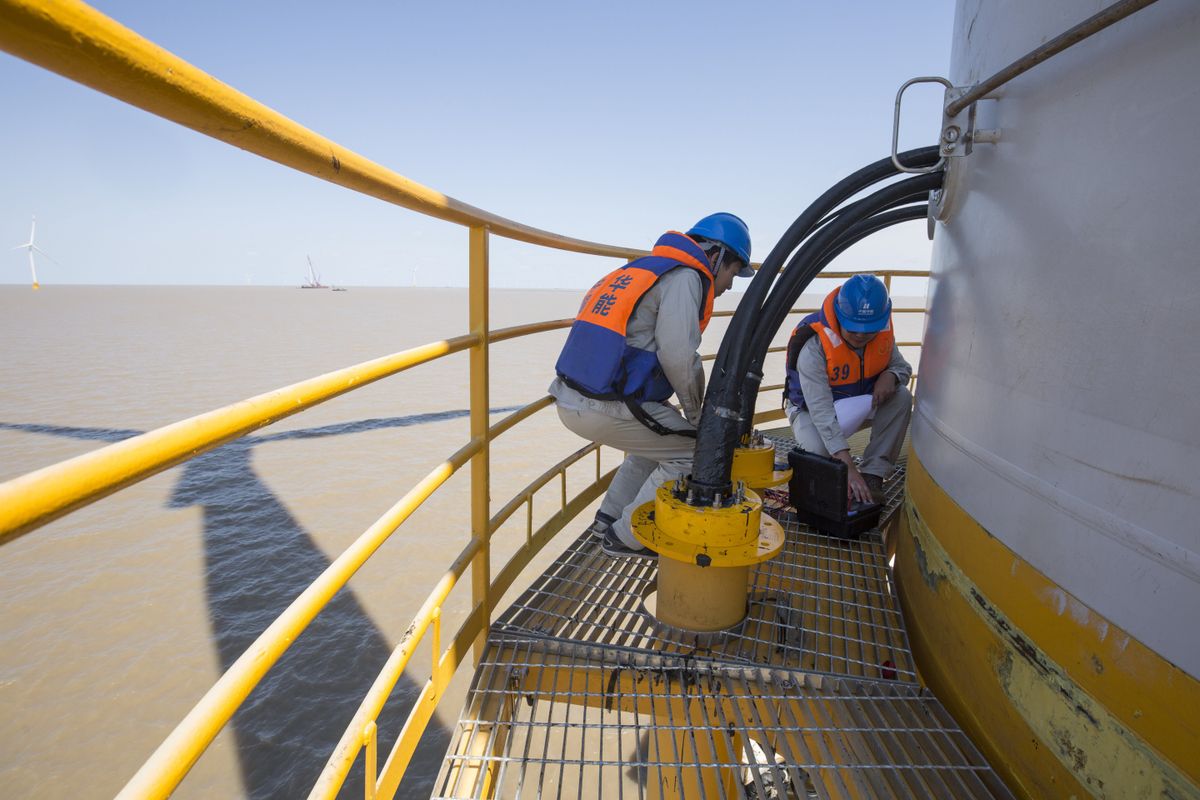
Illustrative editorial photograph · Pexels. Not a photograph of a marketplace listing.
An offshore-wind support specialist may need an extended Rhode Island presence for approved buyer meetings, training or a defined engagement. The monthly-housing connection follows that real schedule, not an announcement that every port-adjacent business will obtain work.
A Rhode Island company that wants to serve offshore wind is not really betting on turbines alone; it is betting on whether it can move heavy parts, people, and documentation through the state’s marine-industrial bottlenecks fast enough to satisfy buyers. That makes the first questions less about ideology and more about port access, vessel timing, laydown space, marine safety procedures, and whether the customer has a real need that is close to a contracting decision. Rhode Island has unusually concrete signals for that analysis: the state’s energy office says Rhode Island became home to the nation’s first offshore wind project in 2016 with the 30 MW Block Island Wind Farm; a 2019 state release described a $4.5 million local workforce and supply-chain commitment tied to Revolution Wind; and a 2022 groundbreaking for South Quay in East Providence described a 525-foot berth and roughly 10 acres of laydown area designed to support offshore wind logistics. Those facts matter because they point to a market that is not hypothetical, but they do not guarantee that a new business can win work or secure site access.
A Rhode Island home while a marine-support contract is assessed
Establish whether the work actually centers on Quonset or another destination. Confirm ordinary access and living needs, but arrange vessels, industrial equipment and marine operations independently through authorized commercial locations. Month ‘n’ More helps you find furnished monthly stays and contact owners about the actual home and your dates; it does not place workers or award business contracts.
Owners should describe known household arrangements without claiming port access, offshore-project endorsement, marine storage permission or guaranteed contractor occupancy. If the home is suitable, list a furnished monthly property on Month ‘n’ More and describe only what you can genuinely offer. This is a possible use case to evaluate, not measured or guaranteed rental demand.
offshore wind in Rhode Island: demand is real, but buyer readiness is the test
For a support business, Rhode Island’s opportunity starts with the difference between market visibility and buyer readiness. The state has visible project history and policy attention, and it continues to build infrastructure around offshore wind. But a support company does not get paid because the industry exists; it gets paid when a developer, vessel operator, component maker, or prime contractor decides to outsource a specific task and can approve the site, quality system, insurance, and schedule. That means a new entrant should distinguish between plausible niches, such as staging, warehousing, marine logistics coordination, crew support, inspection support, or specialized fabrication, and proven demand from a named buyer with an identified scope. The state’s 2019 announcement about Ørsted and Eversource also matters because it showed that supply-chain development was being treated as a workforce and ecosystem issue, not merely a construction one. You can read the state’s original release here: Rhode Island Office of Energy Resources release on the $4.5 million offshore wind workforce and supply-chain investment.
port access and Quonset: where physical location changes the business case
For offshore wind support, port access is not a marketing phrase; it is a cost and feasibility gate. The 2022 South Quay groundbreaking described a future marine terminal in East Providence with a 525-foot berth, water service, and a large upland laydown area, plus proximity to Interstate 195 and Interstate 95. Those details tell a business owner what matters operationally: if your service depends on oversize deliveries, short-term storage, or barge-to-truck transfers, being near a marine-industrial site can reduce handling steps and scheduling friction. They also show why a firm should not assume any waterfront parcel works. A berth is useful only if your cargo, vessel class, and safety plan match the terminal’s rules and the buyer’s project sequence. In Rhode Island, Quonset comes up often in the offshore wind conversation because it is the state’s best-known marine-industrial location, but the commercial question is narrower: can you get enough functional access for your activity at the hours you need, and will your buyer approve the route, crane plan, and security process? The answer may be yes for some businesses and no for others, which is why site selection should be tied to equipment type, not just a desire to be near the water.
For the state’s South Quay project, the official release is useful because it states the scale and logistics intent in plain language: the site is meant to become an intermodal shipping hub with a berth sized for large vessels or barges and about 10 acres of laydown area. That is a concrete signal that Rhode Island is trying to lower transfer costs for offshore wind supply-chain work, not merely host offices. The same release is also a reminder that funding and timing are project-specific; the terminal is a redevelopment effort, not a blanket promise that any business may operate there. See the state’s announcement for the local context: Governor McKee and local officials break ground on South Quay Marine Terminal Phase 1.
supply chain niches that fit Rhode Island, and the ones that do not
The strongest Rhode Island niches tend to be businesses that can be close to marine activity without needing to own the whole logistics chain. Examples include component staging, inventory management, corrosion-resistant coatings coordination, vessel provisioning, temporary office and training space for project teams, marine electrical or mechanical support performed by qualified professionals, and subcontracted fabrication for standardized parts. These are plausible because they connect directly to the state’s port profile and to buyer needs that recur across projects. A weaker niche is any business that requires a guaranteed stream of giant vessel calls, unrestricted waterfront access, or public infrastructure that is still under development. Another weak niche is a company that assumes offshore wind demand automatically converts into purchase orders. In this sector, procurement cycles can be long, technical, and document-heavy, and prime contractors often prefer vendors who already understand safety, traceability, and change control. Rhode Island’s workforce and supply-chain investments are relevant because they suggest that buyers and institutions are trying to make those vendor capabilities more available locally, but they do not replace buyer qualification.
marine safety, compliance, and the difference between training and permission
Marine safety is a commercial requirement, not an optional add-on. A support company may need written procedures for yard traffic, cargo securing, PPE, visitor control, spill response coordination, and interface with vessel operators. But training on these topics is not the same as permission to handle any vessel, any cargo, or any worksite. The same caution applies to credentials and pilots: having a certificate, being part of a program, or participating in a research or workforce initiative does not automatically let a firm operate, sell, or occupy a terminal. Rhode Island’s energy office also notes that wind is an eligible technology under certain state programs, but eligibility depends on the specific program rules and current openings. Businesses should verify current requirements directly through the relevant agency or terminal operator, and where needed, get legal, insurance, or sector-specific advice before signing a lease or bidding on work. Offshore wind support often intersects with heavy trucking, rigging, maritime security, and environmental controls, so “close enough” is not a safe compliance standard.
A hypothetical first project: testing buyer readiness before spending on heavy assets
Example: a Providence-area metal fabrication shop wants to move into offshore wind support by offering custom skids, frames, and minor repair assemblies for a project contractor serving Rhode Island and nearby New England ports. The shop’s first project should not be a major capital purchase; it should be a small, clearly scoped pilot tied to a buyer’s noncritical needs, such as producing one standardized support frame for staging equipment or a short-run batch of shop-fabricated brackets that must pass documented inspection. Success metric: the buyer accepts the first article on schedule, the documentation package passes review, and the shop can repeat the process without rework that erases margin. Stop/no-go condition: if the buyer keeps revising the spec, delays approval, or requires equipment, inspection methods, or certifications the shop cannot realistically sustain, the company should stop before investing in specialized tooling or a dedicated waterfront footprint. The key economic choice is whether to price as a fixed-scope fabrication job, a managed service with inspection and delivery coordination, or a capacity reservation model. Each model carries different capital exposure and operating risk. Fixed-scope pricing is simpler but sensitive to change orders; managed service pricing can better reflect coordination burden but requires stronger controls; capacity reservation only works if there is a repeat buyer with a predictable schedule.
Rhode Island relocation and housing decisions for a marine-logistics business
If the work depends on early-morning port access, driver staging, or same-day coordination with a terminal, where the owner or key manager lives during the first six months matters. A business that must reach East Providence, Providence Harbor, or Quonset-like marine-industrial sites at irregular hours may benefit from a temporary furnished stay in a centrally located area before committing to a full relocation. The point is not convenience alone; it is making sure the decision matches actual work patterns, such as jobsite calls, vessel arrival windows, and meetings with vendors or port personnel. Readers can explore temporary monthly housing options through Month 'n' More search for furnished monthly stays, but the right stay should be chosen for commute reliability and work-shift fit, not for promised amenities that may change. Owners with suitable furnished places can also consider listing them here: Month 'n' More list your place for monthly stays. For a founder who expects frequent site visits to East Providence one week and Quonset-area meetings the next, a central short-term base can reduce dead time while the firm proves demand. That is especially useful before taking on warehouse leases or committing to a daily commute pattern that assumes the buyer work will materialize exactly as planned.
Operational due-diligence checklist for a Rhode Island offshore-wind support company
- Confirm the exact buyer segment: developer, EPC contractor, vessel operator, port tenant, or subvendor, and verify that the segment actually buys the service you plan to sell.
- Map the physical workflow against port access: berth need, truck route, laydown area, security screening, delivery hours, and whether your equipment fits the site rules.
- Review documentation burden early: insurance certificates, safety plans, quality procedures, traceability, and any required vendor registration or prequalification.
- Test a first project with a stop/no-go threshold before buying specialized equipment or signing a long lease.
- Match your relocation plan to work cadence: if the job requires odd-hour port visits, choose temporary housing that reduces travel friction before committing to a permanent move.
The practical conclusion is not that every Rhode Island business should chase offshore wind, but that the best candidates are firms whose services already align with marine logistics, controlled work environments, or technical subcontracting. South Quay’s berth and laydown plans, the state’s offshore wind workforce commitment, and Rhode Island’s early industry history show a place where buyers may value local capacity, yet the winning move is still to prove a specific scope at a realistic scale. If your first buyer can be named, your first project can be bounded, and your site needs match actual port access, then Rhode Island is worth serious consideration; if not, wait until the customer and the logistics are clearer before you spend on real estate or heavy equipment.
For the local context and services discussed here, consult Governor Announces $4.5 Million Investment by Ørsted, Eversource to Grow Rhode Island's Offshore Wind Workforce and Supply Chain | Rhode Island Office of Energy Resources and Governor McKee, Congressional Delegation, Local and State Officials Break Ground on Phase 1 of South Quay Project | Governor's Office, State of Rhode Island. Check current availability and eligibility with the responsible organization before making a business or relocation commitment.
Make your next month feel more settled.
Related reading

Providence Cooking Stays: Inspect the Kitchen Inventory
How to inspect a Providence monthly stay’s kitchen inventory so you can decide whether cooking there will be practical, not just possible.

A relocation checklist for your temporary home
A steady, step-by-step plan for finding a place, organizing arrival and making the first few days in a new city less hectic.