New Mexico national-laboratory commercialization: licensing is not a customer pipeline
How New Mexico’s national-lab ecosystem can help a tech business validate, license, and sell—without mistaking lab contact for a customer pipeline.
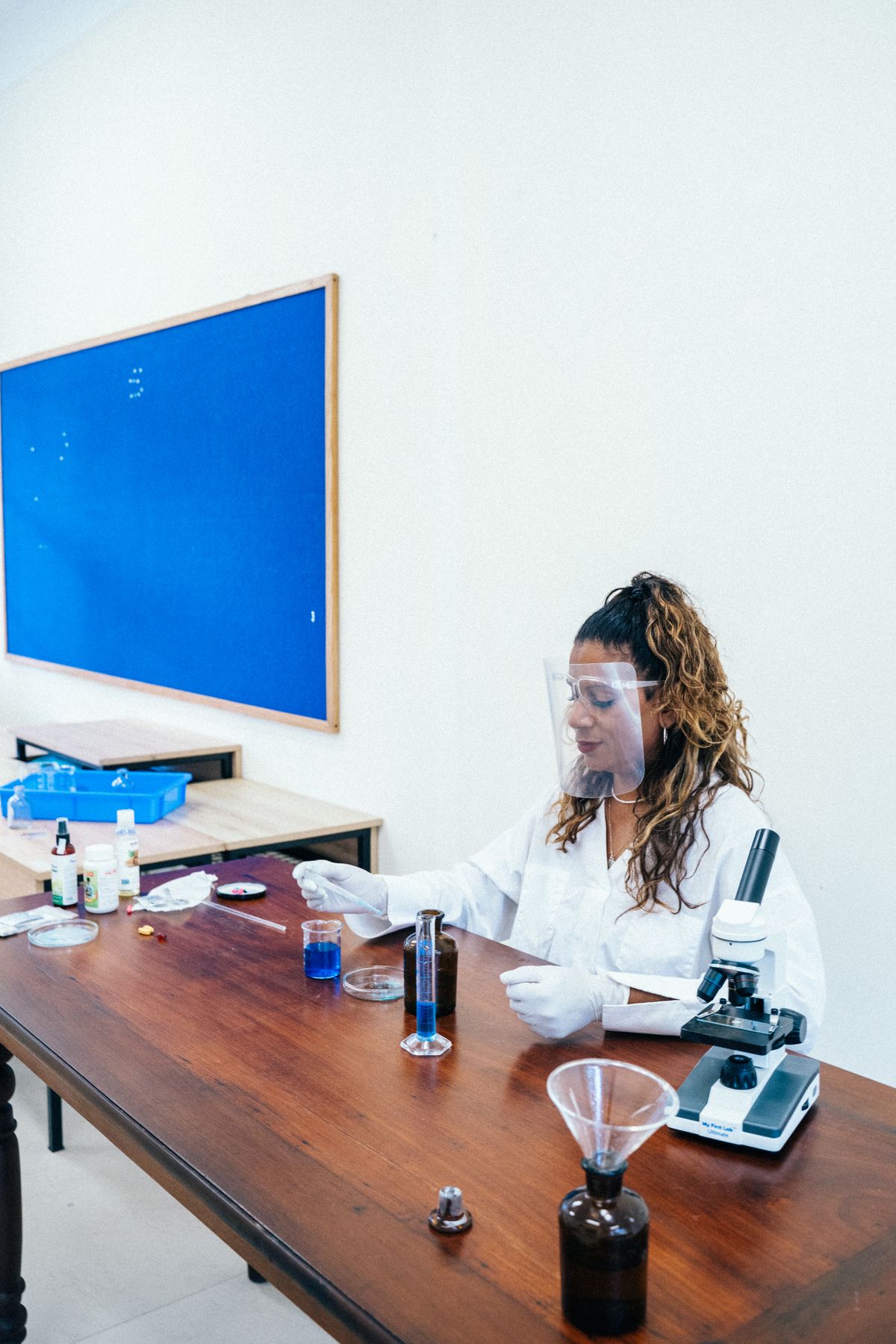
Illustrative editorial photograph · Pexels. Not a photograph of a marketplace listing.
A founder exploring a national-laboratory technology may need an extended New Mexico period for approved discussions and customer validation. A monthly home can support that investigation without creating licensing rights, laboratory access or an obligation to relocate permanently.
A license from Sandia or Los Alamos can be a valuable asset, but it is not the same thing as a paying market. In New Mexico, the real commercial question is whether a lab-origin technology can survive the transition from protected intellectual property to a product buyers will actually purchase, support, and renew. That distinction matters because the state’s lab ecosystem includes genuine opportunities for small firms—such as Sandia’s 5 percent pricing preference for qualified New Mexico small businesses on certain subcontracts and the long-running New Mexico Small Business Assistance program—but those tools help with access, validation, and procurement only when a company has already matched a specific need. The decision is not simply whether to "work with the labs"; it is whether your team can turn lab-derived technology into a compliant, supportable offering with a buyer, an integration path, and a realistic operating model.
An Albuquerque base while commercialization is investigated
Establish which meetings actually require an Albuquerque or other local presence. Ask about normal living and home-working needs, and keep controlled technical information, prototype work and specialist equipment within their authorized settings. Month ‘n’ More helps you find furnished monthly stays and contact owners about the actual home and your dates; it does not place workers or award business contracts.
Owners should describe a residence truthfully rather than imply national-laboratory affiliation, technology-transfer privileges or an approved research workspace. If the home is suitable, list a furnished monthly property on Month ‘n’ More and describe only what you can genuinely offer. This is a possible use case to evaluate, not measured or guaranteed rental demand.
technology transfer in New Mexico: what it can do, and what it cannot
The phrase technology transfer sounds broader than it is. At Sandia and Los Alamos, it can mean licensing intellectual property, collaborating under a CRADA, or using assistance programs that help mature a concept. It does not mean that a license creates customers, nor that a lab will function as a sales channel. For a New Mexico company, the practical value of technology transfer is that it can reduce technical uncertainty, open a path to protected differentiation, and make a first demonstration more credible. The limit is just as important: even a strong laboratory pedigree still leaves you with product-market fit, field support, training, warranty exposure, and regulatory obligations to solve on your own.
That is why the state’s own history is useful evidence. Sandia’s small-business news release notes a 5 percent pricing preference for qualified New Mexico small businesses and says the preference could apply to about $100 million in subcontract awards in the first year, with evaluations in the $150,000 to $5 million range. Those are not grants and not guaranteed work, but they do show where a lab buyer may buy services or goods from smaller in-state suppliers. Read the official announcement here: Sandia’s small-business subcontracting announcement.
license strategy: treat the license as the start of diligence, not the finish
A license can be the right commercial move when your team can add value around a lab invention: manufacturing, packaging, software integration, field calibration, customer-specific adaptation, or compliance. It is often a weaker choice when you expect the lab name itself to drive demand. That matters in a state where public-sector, defense-related, and scientific buyers are knowledgeable and exacting. A license may give you a legal right to practice the invention, but it does not grant a market, revenue, or automatic procurement eligibility. You still need to confirm scope, field-of-use limits, royalty obligations, improvement rights, sublicensing permissions, indemnity, and whether the licensed asset depends on other patents or software rights.
If the technology is software, sensing, materials, or an instrument that could cross borders or touch controlled data, the compliance review becomes more than a paperwork exercise. You may need counsel on export controls, restricted end users, and whether a technical exchange with a non-U.S. person changes what can be shared and when. None of that is solved by being in Albuquerque, and none of it should be managed casually if the product will serve defense, energy, aerospace, or advanced manufacturing customers.
Albuquerque as an operating base, not a shortcut to demand
Albuquerque matters because it is one of the state’s main places where a lab-adjacent company can find suppliers, engineers, contract manufacturing help, and short-turn support services without building everything from scratch. But location alone does not make a business “lab-ready.” The commercial advantage is operational: a founder can keep the team close enough to handle meetings, prototypes, shipping, or buyer demonstrations while still testing whether the product earns repeat orders outside the lab orbit. That is especially useful if your first users will be regional manufacturers, utilities, public agencies, or professional-service buyers who care more about response time and reliability than about scientific prestige.
A second official source shows why the state has a real technical-assistance layer beyond simple networking. Sandia says the New Mexico Small Business Assistance Program was created after the 2000 New Mexico Legislature’s Laboratory Partnership with Small Business Tax Credit Act, and that Los Alamos began participating in 2007. The program has provided $76.1 million in technical assistance to over 3,200 businesses, according to Sandia’s summary at Small-business success. Those are dated figures, not a promise of current funding, but they signal a durable pathway for technical validation in the state.
export controls and regulated work: where the commercial model can break
Export controls are one of the fastest ways a promising lab-derived business can slow down. If a product, service, or dataset is controlled, the company must build compliance into its workflow before selling broadly, taking on foreign customers, or letting non-U.S. persons work on sensitive elements. This is not just a legal footnote; it changes where the team can be located, who can touch the technical files, what support you can provide remotely, and whether a prospective customer is actually reachable. For some founders, this is the point where a simple software-led commercialization plan becomes a tightly managed domestic deployment business.
The trade-off is straightforward: tighter compliance can reduce the addressable market, but it can also make a niche business more trustworthy to sophisticated buyers. If you are selling into advanced manufacturing, government contractors, or energy systems, a clear export-control posture can be part of your commercial validation, not merely a constraint. That said, you should obtain qualified legal advice before treating any technology as export-control-light or assuming a specific license allows unrestricted distribution.
commercial validation: a first project example with a stop rule
Example: a three-person Albuquerque company licenses a lab-developed sensor calibration method and wants to decide whether it can sell a service package to regional equipment integrators. The first project is not a broad launch; it is a paid pilot with one integrator serving one customer segment. The success metric is simple: the pilot must produce a repeatable workflow that yields a deliverable the buyer accepts without major rework, and the buyer must agree that the calibration package solves a problem they currently pay to manage in a less efficient way. The no-go condition is equally clear: if the pilot requires custom engineering on every deployment, or if support demands are high enough that the service cannot be standardized, the company pauses commercialization and either narrows the field-of-use or exits the niche.
That kind of validation matters more than a logo on a license agreement. Labs can help reduce technical risk, but commercial validation asks a different question: will a customer pay for this in a form you can support at a margin that does not collapse under travel, integration, warranty, or retraining costs? If the answer depends on one heroic deployment, the business is not validated yet.
operating choices: scope, buyer, pricing, and integration
- Scope: choose one use case with a clearly bounded technical environment instead of a multi-market launch that forces too many adaptations at once.
- Buyer: prefer an identifiable buyer role—integrator, plant manager, procurement lead, or program manager—rather than a vague “industry” audience.
- Pricing model: service, subscription, per-unit, or support retainer each carries different compliance and cash-flow burdens; choose the one that matches how often the customer needs the technology.
- Integration: if the offer must plug into an existing system, budget time and support for compatibility checks, documentation, and on-site or remote commissioning.
- Operating cost or capital exposure: decide early whether you are building a service-heavy company or a product company, because the equipment, training, inventory, and insurance profiles are very different.
due diligence checklist for a New Mexico lab-origin company
- Confirm the asset chain: who owns the IP, what rights are included, and whether improvements or data belong to the company, the lab, or both.
- Verify local qualification rules if pursuing procurement preferences; Sandia’s small-business preference requires New Mexico business registration, an operating location in state, and other criteria, so verify current eligibility before relying on it.
- Map compliance requirements before sharing technical data with outside parties, especially if the work could implicate export controls or restricted end users.
- Test whether the technology can be standardized into a supportable product or service without custom engineering on every sale.
- Check whether your first customers will need training, maintenance, calibration, or documentation that creates hidden service costs.
- Separate lab validation from market validation: a successful technical test is not the same as a buyer committing budget.
relocation and housing decisions tied to the work, not just the ZIP code
If your commercialization plan depends on being in Albuquerque for meetings, procurement response windows, prototype handoff, or short-turn customer support, your temporary housing choice should track work patterns rather than generic lifestyle preferences. A founder who expects frequent visits to Sandia-facing suppliers, contract manufacturers, or customer sites may want a furnished monthly stay close enough for early-morning or late-day meetings, but not so expensive or rigid that the company burns cash before the first pilot converts. Month-to-month living also helps if the project timeline is uncertain and the team needs to decide, after the pilot, whether to commit to a lease or expand local headcount.
For that search process, use monthly-stay listings for New Mexico work trips to compare calendar-month options by exact dates, and if you own a place that could serve project teams or visiting technical staff, consider listing it for monthly stays. Those tools are useful for commercial staging, not for promises of availability, workspace suitability, or internet speed. The right housing choice is the one that lets you reach meetings, handle equipment, and stay flexible until the project proves it deserves a permanent move.
The practical decision in New Mexico is not whether national-laboratory commercialization is possible; it clearly is. The decision is whether your company has a real product path after the first technical win. If you can show commercial validation with a narrow pilot, manage export-controls and licensing limits, and support the first customer from a workable Albuquerque base, then a move makes sense. If the business depends on lab prestige more than buyer demand, stay small, stay flexible, and do not confuse a license with a pipeline.
For the local context and services discussed here, consult Sandia offers NM small businesses opportunity to thrive – News Releases and Small-business success – Energy. Check current availability and eligibility with the responsible organization before making a business or relocation commitment.
Make your next month feel more settled.
Related reading

Santa Fe Artist Stays: Ask Before Using the Space
What Santa Fe artists should ask before using a monthly stay as a studio: light, materials, cleanup, storage, access, and owner permission.

A relocation checklist for your temporary home
A steady, step-by-step plan for finding a place, organizing arrival and making the first few days in a new city less hectic.