Chicago warehouse automation consulting: start with one measurable bottleneck
How a Chicago warehouse automation consultant can pick one bottleneck, validate demand, and base operations and temporary housing on real site access needs.
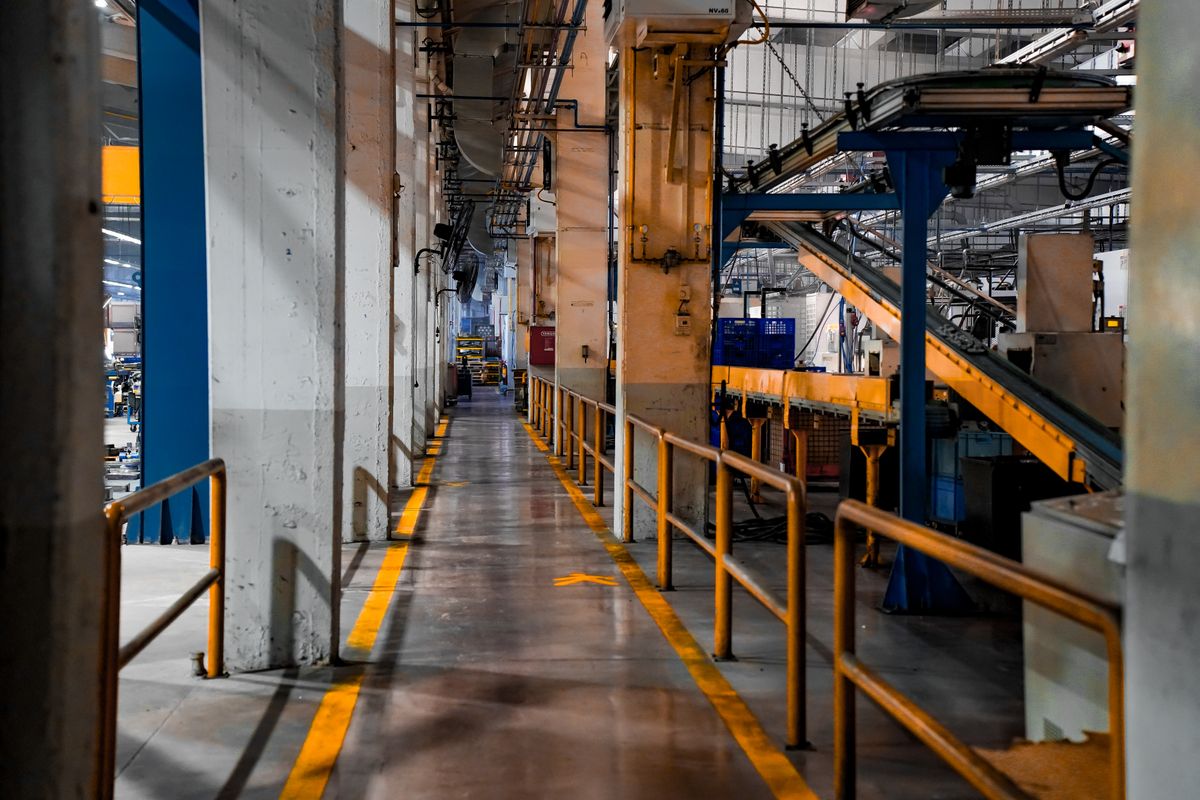
Illustrative editorial photograph · Pexels. Not a photograph of a marketplace listing.
A warehouse-integration engagement may bring a visiting specialist to the Chicago area for installation coordination, operator handover and acceptance testing. When the confirmed work spans calendar months, housing becomes an operational planning decision rather than a speculative relocation.
A warehouse automation consulting practice in Chicago lives or dies on one question: which bottleneck can you measure before you touch a conveyor, scanner, or software stack? In the Chicago warehouse market, that usually means throughput, safety, and integration problems that are visible in receiving, pick, pack, or shipping—not a vague promise to “modernize operations.” Illinois has institutional support for this kind of work: IMEC and World Business Chicago announced a partnership on September 12, 2024 to strengthen Chicago manufacturing, and IMEC said it serves as Illinois’s NIST Manufacturing Extension Partnership center. That matters because a consultant who understands local operations can attach an automation proposal to a wider ecosystem of manufacturing, logistics, and workforce support rather than selling equipment for its own sake.
A Chicago living base while one warehouse pilot runs
Choose a base using the actual warehouse entrance and work hours, not just a city-center address. Ask about parking, sleep conditions and ordinary home-working needs. Leave machinery, stock and customer visits within their authorized commercial arrangements. Month ‘n’ More helps you find furnished monthly stays and contact owners about the actual home and your dates; it does not place workers or award business contracts.
Owners should describe the home’s actual access and daily-living setup without promising warehouse employment, industrial use of the property or a guaranteed logistics-tenant pipeline. If the home is suitable, list a furnished monthly property on Month ‘n’ More and describe only what you can genuinely offer. This is a possible use case to evaluate, not measured or guaranteed rental demand.
Why Chicago is a workable launch point for warehouse automation consulting
Chicago is not just a big city with many warehouses; it is a logistics and industrial node where small and midsize operators often need targeted upgrades more than full redesigns. The practical opportunity is in helping a warehouse improve one process that slows everything else down. Because IMEC and World Business Chicago said their 2024 partnership would support small and mid-sized manufacturers and address productivity through skills and automation, the local conversation is already oriented toward applied change rather than abstract digital transformation. That matters for a consultant because buyers in this region are more likely to ask for a measurable outcome—fewer mis-picks, faster dock turns, fewer near misses, better system handoffs—than for a futuristic warehouse concept. IMEC’s resource center also groups its support around automation, ERP, operations strategy, supply chain, safety, and technology, which is a useful reminder that the hard part is usually integration, not the device itself.
There is also a regional validation signal, but it should be read carefully. IMEC reported that in 2023 it assisted over 2,500 companies and helped create or retain over 5,200 jobs, producing more than $650 million in aggregate impact to the Illinois economy. Those figures do not guarantee demand for any one consultant, but they do show that Illinois manufacturers are willing to engage outside help when the work is practical and operational. A Chicago warehouse automation consultant should therefore start with a service that is narrow enough to buy and broad enough to matter: process mapping plus a small integration roadmap, not a full-facility redesign on day one.
Start with throughput, safety, or integration—not with the shiny equipment
The focus terms here are not interchangeable. Throughput is about how much work actually moves through the facility within current labor and space constraints. Safety is about reducing strain, pinch points, traffic conflicts, and other operational risks around material movement. Integration is about whether scanners, WMS/ERP, conveyors, labelers, and reporting tools exchange accurate data without manual re-entry. A good Chicago warehouse automation consultant should sell the diagnosis of one bottleneck and the sequencing of one fix. For example, a site may have adequate labor but lose hours because carton labels are generated in one system, pack confirmation lives in another, and shipping exceptions are handled on paper. That is an integration problem that appears as a throughput problem. Another site may have decent software but too much walking between receiving and putaway. That is a throughput and safety problem that might be solved with layout changes, slotting changes, or limited conveyance rather than major automation.
Commercial trade-offs matter. A consulting engagement focused on throughput may be easier to explain to a buyer, but it can fail if the real issue is data integrity. A safety-focused engagement may win management attention after an incident or audit, but it can stall if the recommended changes interrupt daily flow. An integration project can produce durable gains, but it often requires more stakeholder coordination and more time spent documenting exceptions. The consulting model should reflect that. Some buyers want a fixed-fee assessment; others will only approve a phased engagement that starts with observation, data collection, and a short recommendation package. In Chicago, where facilities vary from urban infill sites to larger suburban distribution footprints, scope discipline matters because the same recommendation may have very different implications depending on dock access, shift patterns, and the age of the warehouse management stack.
A hypothetical first client example: one bottleneck, one pilot
Example: a Chicago-area distributor asks for help because outbound orders are missing cutoff times on peak days. The consultant observes that orders are not actually getting “stuck” on the line; they are being delayed when the warehouse team has to reconcile inventory locations between a WMS and a legacy ERP after cycle counts. The first project is not a full automation purchase. It is a two-week diagnosis of the handoff between inventory adjustment, wave release, and pack confirmation, followed by a simple pilot: one product family, one shift, one revised integration rule, and one exception-report dashboard. The success metric is concrete: the client must see a sustained reduction in manual rework at the staging point and a measurable improvement in on-time outbound processing for the pilot family across the test window. The no-go condition is equally concrete: if the pilot increases exception handling, creates new inventory discrepancies, or fails to improve shipment readiness within the test period, the consultant recommends stopping and redesigning the workflow before buying hardware.
This is where a Chicago consultant can create value without pretending to be a software vendor or equipment integrator. The service can include operator observation, process timing, exception analysis, and a short roadmap that identifies whether the real fix is software configuration, layout change, training, or a narrow automation add-on such as scan-and-convey routing. Because the work is anchored to one bottleneck, the client is less exposed to capital creep. And because the pilot is tied to a success metric, the consultant can earn a second engagement only if the first one proves the case.
What local institutions can and cannot do for you
Chicago buyers often want a trusted intermediary, and Illinois has several, but they are not substitutes for a sale. IMEC’s partnership with World Business Chicago, announced on September 12, 2024, is a good reminder that regional institutions can convene, educate, and point companies toward support. IMEC also said the partnership would include roundtables and a Manufacturing Month Series in October, plus a network of over 250 manufacturers, agencies, and partners. That network can help a consultant understand pain points and language, but it does not grant market access, procurement preference, or facility permission. Likewise, the mention of a Manufacturing Technology Center at Richard J. Daley College in Chicago in IMEC’s 2026 coverage signals local training capacity, but a nearby training site is not the same thing as access to its equipment or labs. The practical lesson is to use institutions for learning, referrals, and workforce awareness—not as a substitute for due diligence with each prospective warehouse customer.
For market validation and context, start with the IMEC resource center on automation, operations strategy, and supply chain topics and the IMEC and World Business Chicago partnership announcement to understand the local vocabulary and support ecosystem. Then verify any grant, training, or cohort opportunity directly through the current source; historical announcements are not guarantees that a program is still open.
Operational due diligence before you quote a warehouse
- Map the bottleneck in terms the buyer already uses: receiving, putaway, pick, pack, ship, cycle count, returns, or exception handling.
- Confirm which systems own truth for inventory, orders, and shipping labels; do not assume the WMS and ERP are aligned.
- Check whether the site’s floor plan, dock flow, and pedestrian routes make the proposed change safe and practical.
- Separate process fixes from capital equipment so the buyer understands what can be tested before it is purchased.
- Ask who will own change management on the client side; automation fails when nobody is responsible for training and exception review.
- Review whether the project will affect temp labor, shift timing, carrier cutoff work, or customer geography in ways that change the business case.
A consultant should also budget time for legal, insurance, and technical review. If the project touches property modifications, electrical changes, conveyor installation, or data integrations with customer systems, the buyer may need qualified professional advice beyond the consultant’s scope. The point is not to avoid ambition; it is to avoid promising a warehouse automation outcome that depends on approvals, vendor warranties, or system access you do not control.
Relocation and housing: live close enough to learn the operation
For a Chicago warehouse automation consultant, temporary housing is a business decision, not a lifestyle accessory. The right place to stay depends on site access hours, where the warehouses are clustered, how often you need to visit docks before or after shift change, and whether you are carrying demo scanners, a laptop, measurement tools, or presentation materials. If your first clients are on the city’s industrial edges or in nearby logistics corridors, it may make sense to stay somewhere that reduces commute uncertainty rather than somewhere that looks attractive on a map. Exact calendar-month stays are especially useful when a pilot runs across several weeks of observation and follow-up, because the project may not align neatly with a standard lease cycle. You can search furnished monthly options through Month n’ More search and, if you are a host with a work-suitable place, list your place here so consultants and project teams can contact owners directly. The key is to choose a stay based on where you will actually be entering and leaving facilities, not on downtown prestige or tourist convenience.
A practical housing rule follows from the job itself: if most of your work happens during early receiving windows or late shift transitions, prioritize predictable access over amenities. If you expect repeated visits across multiple warehouses, it may be better to live where you can move efficiently between sites instead of locking yourself into one neighborhood that adds friction to every trip. That is also why a consultant should ask clients about visitor parking, security check-in, badge lead times, and whether the site allows outside visitors during working hours before committing to any nearby stay.
How to decide whether this niche is worth entering now
The niche is attractive if you can sell a first engagement that is small, measurable, and integration-aware. It is weaker if your only offer is large-scale automation design without field proof. Chicago’s manufacturing and logistics base, plus IMEC’s ongoing emphasis on automation, workforce, and supply chain support, make it plausible to build a practice around diagnostic consulting and phased pilots. But demand is not the same as guaranteed revenue. You still need a credible way to identify buyers who feel throughput pain, safety exposure, or system fragmentation and who can approve a limited pilot. The most defensible business model is usually a paid assessment followed by a narrow implementation roadmap, with any software or equipment procurement kept separate unless you have the right technical and contractual partners.
The best first move is not to chase every warehouse. It is to choose one Chicago-area segment, one measurable bottleneck, and one repeatable service package. If you can show that a pilot reduces rework or speeds a bottleneck without creating new safety risks or integration failures, the next client becomes easier to win. If you cannot, the right decision is to stop before you add headcount, inventory, or equipment commitments you cannot support.
For the local context and services discussed here, consult IMEC & World Business Chicago Announce Strategic Partnership to Drive the Future of Manufacturing in Chicago - IMEC Site and Resource Center - IMEC Site. Check current availability and eligibility with the responsible organization before making a business or relocation commitment.
Make your next month feel more settled.
Related reading

Chicago Accessibility: Inspect the Entire Entry Route
For Chicago monthly stays, inspect the whole entry route—from sidewalk to elevator to unit door—before deciding whether a place works.

A relocation checklist for your temporary home
A steady, step-by-step plan for finding a place, organizing arrival and making the first few days in a new city less hectic.