Wisconsin water-technology businesses: make an industrial pilot measurable
How a Wisconsin water-technology company can choose a Milwaukee pilot, measure sampling, control operating cost, and decide whether relocation is worth it.
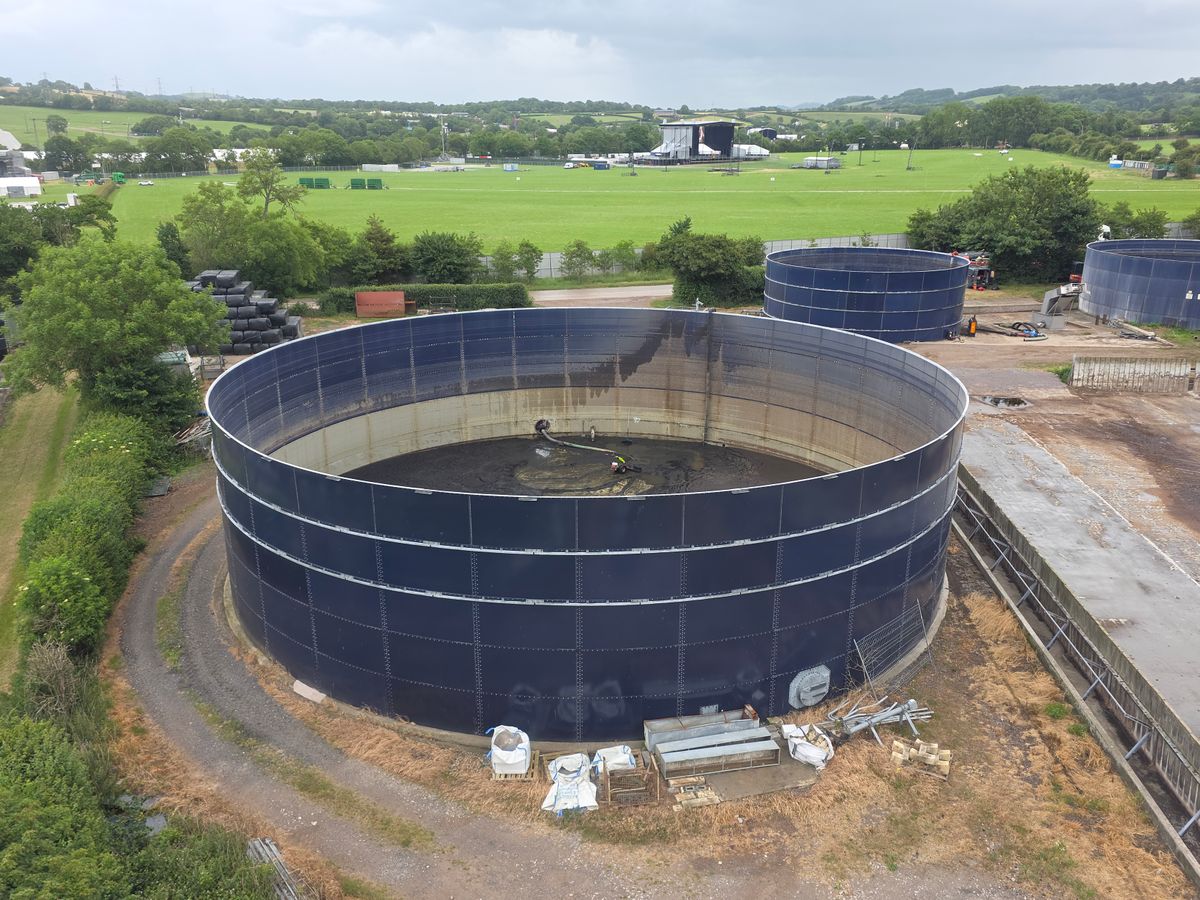
Illustrative editorial photograph · Pexels. Not a photograph of a marketplace listing.
A water-technology specialist may need an extended Milwaukee engagement for approved sampling coordination, evaluation and customer handover. A furnished monthly home supports that assignment without becoming part of the industrial pilot or its safety arrangements.
A water-technology pilot in Milwaukee only pays off if the test is narrow enough to be measured and broad enough to prove a sale. That is the practical edge Wisconsin offers: a dense cluster of utilities, manufacturers, researchers, and demonstration sites where a founder can compare product performance against real wastewater or stormwater conditions instead of lab assumptions.
A Milwaukee home during a supervised water-technology pilot
Use actual authorized work destinations and attendance dates to choose a base. Ask about ordinary household work needs, and arrange sampling, industrial equipment and water testing at appropriately approved facilities rather than residential accommodation. Month ‘n’ More helps you find furnished monthly stays and contact owners about the actual home and your dates; it does not place workers or award business contracts.
Owners should describe truthful living features without claiming approved laboratory use, water-testing capacity, industrial customer affiliation or a guaranteed tenant pipeline. If the home is suitable, list a furnished monthly property on Month ‘n’ More and describe only what you can genuinely offer. This is a possible use case to evaluate, not measured or guaranteed rental demand.
Milwaukee as a water technology test market
The City of Milwaukee describes the region as home to more than 150 water-related companies and ties that ecosystem to the Global Water Center and Reed Street Yards, a 17-acre district built around water infrastructure, a riverwalk, and a concentration of industry activity. Those facts matter because a first customer rarely buys from a slide deck. In this market, a startup selling sensors, filtration media, reuse hardware, or monitoring software can find adjacent buyers with different needs but compatible purchasing language: municipal utilities, industrial facilities, engineering firms, and building owners. Milwaukee is useful not because it is generic “water country,” but because the local demand pattern is already specific, technical, and close to actual operating sites.
That context is reinforced by The Water Council’s economic-development page for Milwaukee, which notes the area’s large and mature water-technology hub and points to research universities such as the University of Wisconsin-Milwaukee School of Freshwater Sciences. For a founder, that means the city is not just a place to rent office space; it is a place where pilot design, field feedback, and commercial language can be calibrated around water performance rather than broad tech-market hype.
Milwaukee water technology pilot: what counts as measurable
The City’s water-technology page says The Water Council’s pilot program allows innovators to conduct in-field testing for water technologies at Wisconsin demonstration sites, including Milwaukee Metropolitan Sewerage District treatment plants. That is the right kind of environment for a pilot only if the question is tightly framed. A useful pilot should answer one operational question, such as whether a treatment step reduces fouling, whether a sensor can hold calibration in wet conditions, or whether a reuse device lowers peak discharge enough to justify installation. A vague pilot that tries to prove everything at once usually burns time and credibility.
The local precedent is important. Milwaukee has already hosted practical demonstrations such as the RainShed concept, which the City describes as a small building that harvests rainwater for onsite reuse and was designed to be built for under $1,000 while holding up to 550 gallons of stormwater. Another example is StormGUARDen, described as a downspout disconnect device that filters and stores 6.5 rain barrels of stormwater before slowly draining it away from a foundation. These are not instructions for your product, but they show the kind of problem Milwaukee institutions have been willing to test: stormwater capture, reuse, filtration, and building-adjacent water management. That helps a founder decide whether the local market is a fit for instrumentation, compact reuse systems, or controls that reduce water and energy intensity.
sampling and acceptance criteria for an industrial pilot
In a pilot, sampling is not a routine afterthought; it is the backbone of the commercial claim. If you cannot explain what was sampled, how often, under what operating conditions, and by whom, the result will be hard to sell. For a Milwaukee pilot tied to wastewater or industrial water, the best practice is to define sampling around the product’s claim, not around what is easy to collect. For example, a filtration startup may need influent and effluent samples at fixed intervals, while a software company may need sensor-validation sampling against a trusted reference meter or utility data stream.
The Water Council’s 2011 announcement about the planned Water Research & Business Accelerator Building at 223 W. Pittsburgh is useful here because it explains why shared testing matters. The announcement says the first floor was planned to feature a shared water flow lab, and Badger Meter’s chair described the lab as a necessary but expensive piece of equipment for water research and product development. The point is commercial, not ceremonial: if a founder can avoid buying every piece of capital equipment before proving product-market fit, the pilot can stay focused on evidence instead of overhead. The decision rule should be simple: if the pilot cannot generate a clear before-and-after comparison that a customer would understand, it is not yet an acceptance test.
A practical first-project metric could be framed like this: prove that your device or method produces a stable, repeatable improvement in one defined water-quality or operating parameter over a set pilot period, with samples collected often enough to show whether the result persists across variable flow or weather conditions. The stop condition should also be explicit: if the data fail to show a repeatable benefit after the agreed number of samples or operating cycles, stop the pilot and redesign the claim rather than extending the test indefinitely. That protects both budget and reputation.
operating cost and capital exposure in a Milwaukee launch
For water-technology companies, operating cost is often the difference between an interesting prototype and a sellable system. In Milwaukee, the commercial trade-off is especially visible because the cluster includes companies that understand both hardware and utility buying behavior. The question is not just whether the product works; it is whether the pilot structure lets the founder keep fixed costs low enough to survive the learning cycle.
That is where the shared-lab model and the city’s demonstration sites become strategic. A startup can test at a site without assuming that every function needs to be built in-house on day one. But the trade-off is that shared facilities can limit schedule control, impose site rules, and require careful coordination around access windows, sample handling, and reporting. If your device needs frequent adjustments or specialized sampling support, a pilot site may be cheaper than owning equipment but more expensive in staff time. If your business model relies on a recurring service contract, the pilot should measure service labor as well as product output, because customers will compare total operating cost, not just the hardware sticker.
The 2011 accelerator announcement also notes that the project expected demand for more housing and commercial amenities nearby once the center was complete. That matters for founders deciding whether to stage operations in Milwaukee or commute from elsewhere. If your pilot requires early-morning access, frequent sample pickup, or rapid troubleshooting, living within easy reach of the Fifth Ward or downtown Milwaukee reduces missed windows and makes site response cheaper. If the work is mostly remote data review with only occasional site visits, you can temporarily base yourself farther away and keep burn lower.
A hypothetical first-customer example for a Milwaukee industrial pilot
Example: a startup has a compact monitoring system that flags fouling in industrial water loops before a treatment step loses efficiency. Instead of asking a large manufacturer to buy the full system, the founder proposes a short pilot with one line, one control comparison, and one primary metric: whether the system detects the fouling condition early enough to change maintenance timing without increasing false alarms beyond an agreed threshold. The pilot’s success metric is not “more data” but a simple commercial result: the customer agrees the signal is useful enough to consider a paid expansion or a second-site test. The no-go condition is equally concrete: if the system cannot maintain trustworthy readings under the site’s sampling conditions, or if the maintenance team finds the alerts too noisy to act on, the pilot ends without rolling into a broader deployment.
That example is intentionally narrow because Milwaukee’s strength is not abstract experimentation; it is the ability to translate technical proof into a procurement conversation. The local customer base includes utilities, manufacturers, and established water companies, so a founder can test whether the buying unit is operations, engineering, sustainability, or maintenance. The buyer matters because pricing follows the buyer’s pain point. A maintenance-led sale may support a service model, while a utility-led sale may require deeper validation and longer procurement cycles. None of that is guaranteed by being in the city, so the pilot should be designed to reveal who actually values the result.
Relocation, monthly stays, and where to live before committing
Because the first pilot often depends on access hours, truck loading, sample runs, and quick meetings in Milwaukee, relocation should be treated as an operational decision rather than a lifestyle choice. Temporary housing near the worksite can be cheaper than constant travel if your pilot requires morning sampling, evening alarms, or repeated visits to the Global Water Center, Reed Street Yards, or a utility site. If you need furnished monthly housing while you test the market, the search page at monthly furnished stays in Wisconsin and beyond can help you evaluate locations before making a full move. If you own a duplex, condo, or small building near the pilot zone and want to see whether an owner-occupied arrangement could support a visiting founder or technician, list your place for monthly guests is the relevant starting point.
The work geography should drive the housing choice. A team doing daily sampling or instrument checks may want to stay close to the Fifth Ward, Walker’s Point, or another area with quick access to industrial corridors and downtown. A team that only visits a demonstration site weekly can live farther out and spend less on temporary lodging. Either way, do not lock in a permanent move until the pilot reveals the true cadence of site visits, sample transport, and customer meetings. The city’s water cluster is compact enough that location efficiency matters, but diverse enough that one pilot can lead to very different follow-on sites.
Due-diligence checklist for a Wisconsin water-technology pilot
- Confirm the exact demonstration site, access rules, and who signs off on sampling, reporting, and safety procedures; do not assume a utility or research site will behave like a rental lab.
- Write the pilot question as one measurable claim, with a baseline, sampling plan, and stop date; avoid pilots that are only demonstrations of enthusiasm.
- Estimate operating cost in the pilot phase separately from steady-state cost, including labor, sample handling, travel, calibration, and any site-specific coordination.
- Identify the likely buyer before the pilot starts: utility, industrial plant, building owner, or engineering integrator; each has a different decision path and tolerance for risk.
- Check whether accelerator, grant, or demonstration opportunities are current by verifying eligibility through the linked official source; historical announcements are not guarantees and may no longer be open.
For current context on Milwaukee’s water cluster, start with the City of Milwaukee’s water-technology page at Water Technology - City of Milwaukee and The Water Council’s Milwaukee economic-development page at Milwaukee - The Water Council. Both sources make the same larger point from different angles: Milwaukee is strongest when a business can turn a controlled pilot into a credible operating story. If your technology can survive real sampling, keep operating cost under control, and generate a buyer-specific result, the city’s cluster can support the next stage. If it cannot, the right decision is to stop, redesign the claim, and preserve capital for a better-fit site.
For the local context and services discussed here, consult Water Technology - City of Milwaukee and Milwaukee Water Council announces plans for water research & business accelerator building - The Water Council. Check current availability and eligibility with the responsible organization before making a business or relocation commitment.
Make your next month feel more settled.
Related reading

Madison Visiting Stays: Make Bike Storage Part of the Deal
How to evaluate Madison visiting stays for bicycle storage, from rack type to access, with a decision framework and checklist for bike-first travelers.

A relocation checklist for your temporary home
A steady, step-by-step plan for finding a place, organizing arrival and making the first few days in a new city less hectic.