Pittsburgh robotics integration businesses: making a pilot work in an ordinary factory
How a Pittsburgh robotics integrator can pilot one machine in a real plant: scope, staffing, due diligence, and where to stay while proving it out.
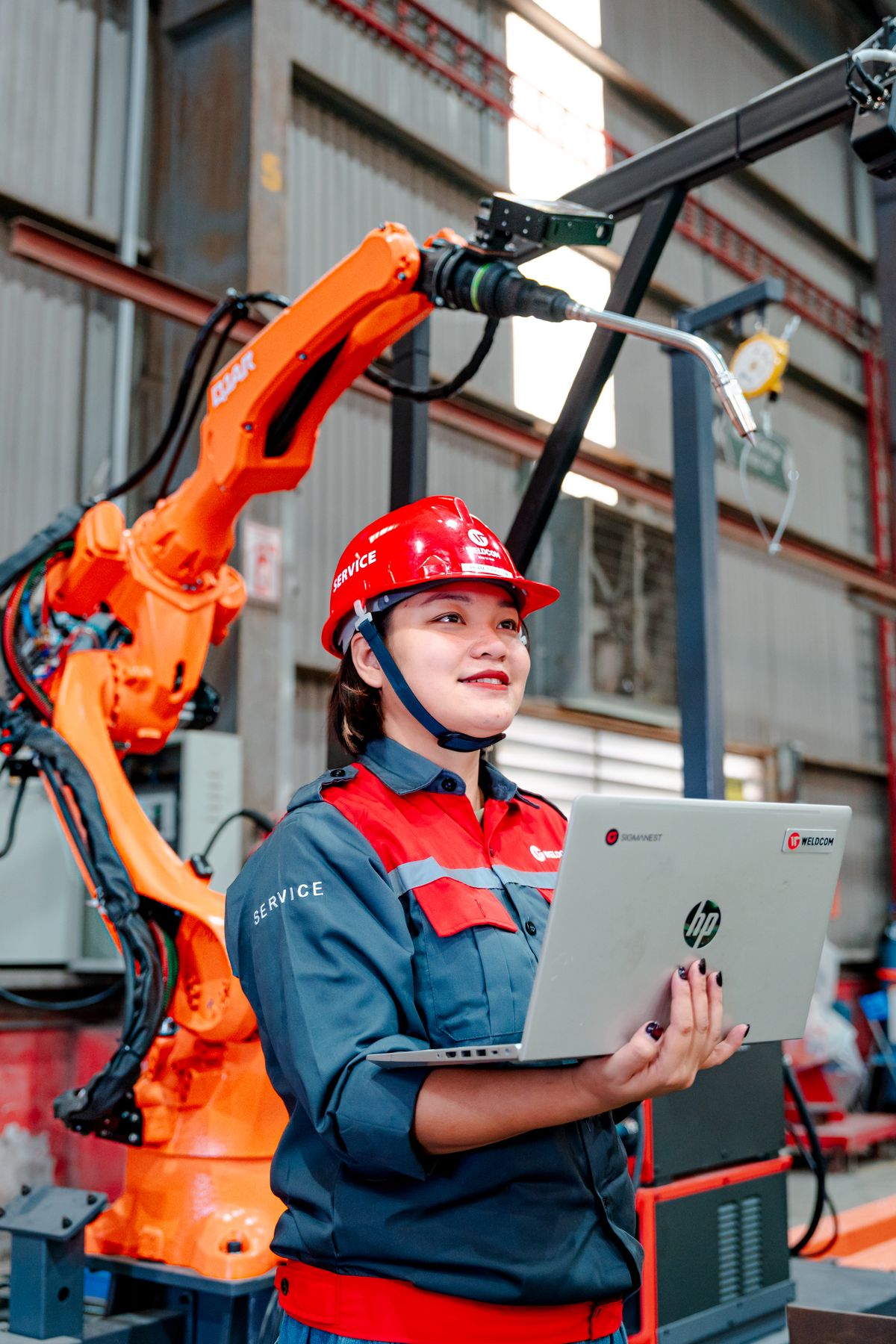
Illustrative editorial photograph · Pexels. Not a photograph of a marketplace listing.
A robotics integrator may spend a sustained period in Pittsburgh coordinating an authorized factory pilot, operator training and acceptance checks. A furnished monthly home can support that engagement without turning the accommodation into a robotics test site.
A pilot that succeeds in an ordinary factory is usually won on the floor, not in the pitch deck. In Pittsburgh, that matters because the regional ecosystem is unusually dense for industrial automation: Carnegie Mellon University is tied to the invention of AI and the world’s first doctoral program in robotics, the Pittsburgh Robotics Network says the local ecosystem is anchored by 130+ robotics organizations, and Pennsylvania’s own robotics page points to a cluster that includes the National Robotics Engineering Center and the Robotics Factory. For a small integrator, that combination changes the business question from “Can we build a robot cell?” to “Can we install one that survives shift changes, mixed part quality, and a skeptical production supervisor?”
A Pittsburgh home during a robotics-integration pilot
Choose housing around the actual customer facility and approved work hours. Ask about ordinary living, parking and desk needs; leave machinery, demonstrations and sensitive customer materials at their appropriate authorized locations. Month ‘n’ More helps you find furnished monthly stays and contact owners about the actual home and your dates; it does not place workers or award business contracts.
Owners can describe a practical household setup without promising laboratory access, a workshop suitable for robots or a connection to an industrial employer. If the home is suitable, list a furnished monthly property on Month ‘n’ More and describe only what you can genuinely offer. This is a possible use case to evaluate, not measured or guaranteed rental demand.
Pittsburgh robotics integration: what kind of business actually fits
The strongest first customers are rarely the most glamorous. In this market, Pittsburgh robotics integration businesses tend to find better first traction with repetitive industrial tasks where the buyer already feels pain: machine tending, palletizing, inspection at the end of line, or moving material between a manual station and a semi-automated one. That is different from selling a custom research prototype. Integration work means combining robots, end effectors, safety systems, fixturing, software, and plant procedures into one operating cell that can be maintained by ordinary staff after go-live. The local trade-off is that Pittsburgh offers real technical depth, but depth can tempt a founder into overbuilding. A pilot that needs advanced autonomy, vision, and custom controls all at once may be the wrong first sale. A more durable entry point is a narrow integration package that solves one production bottleneck and can be repeated with minor changes. The buyer is not purchasing robotics as a concept; they are purchasing reduced manual handling, more stable output, or fewer misses in a specific process.
integration: where the local ecosystem helps, and where it does not
The Pennsylvania Department of Community and Economic Development’s robotics page notes resources that matter for an integrator, including the Pittsburgh Robotics Network, the National Robotics Engineering Center, and industrial resource centers. See the state’s robotics and technology overview at Pennsylvania’s robotics and technology resource page. That page is useful not because it guarantees customers, but because it shows where commercial partners, transfer organizations, and manufacturing support sit in the region. The Pittsburgh Robotics Network says it connects industry with robotics leaders and stakeholders to accelerate business growth and adoption of robotic solutions and AI technologies. Its launch announcement for the Robotics Factory is also worth reading because it shows how regional partners think about commercialization: the Robotics Factory launch announcement describes a program created under the $62.7 million Build Back Better Regional Challenge award to the Southwestern Pennsylvania New Economy Collaborative, with a Create, Accelerate, and Scale structure. That does not mean a new integrator should expect funding. It does mean the region has organized infrastructure for early product testing, manufacturing-oriented mentoring, and customer discovery. The limitation is just as important. These programs are not licenses, not automatic buyers, and not permission to sell into a plant. A founder still needs a clear safety case, contract structure, insurance review, and field service plan. If the first project touches controls or safety devices, qualified engineering and legal review are not optional.
operator training and the hidden cost of a successful pilot
A pilot that only works when the vendor is in the room is not a working pilot. For that reason, operator training should be designed as part of the cell, not added at the end. In industrial robotics, training is not just one classroom session. It includes startup checks, jam recovery, lockout/tagout awareness as handled by the plant’s own safety program, cycle start procedures, fault acknowledgment, routine cleaning, and who is allowed to adjust part presentation. The trade-off is time versus resilience. More training time raises early project cost and may slow the first weeks of production, but it reduces avoidable downtime after handoff. In an ordinary factory, the operator group may include temporary staff, maintenance techs, and supervisors with mixed comfort levels around automation. A narrow pilot should therefore define who can do what. If the cell will run on second shift, the go/no-go decision should include whether second-shift staff can restart it without calling the original programmer.
cycle time: the metric that keeps the project honest
Cycle time is the language that keeps a robotics pilot grounded. It is not enough to say the robot moves faster than a person. The actual comparison is output per hour, changeover friction, uptime, and the number of exceptions that interrupt the flow. A pilot can worsen cycle time if it creates a new bottleneck at loading, inspection, or downstream packing. That is why an integrator should measure the full work loop. If a robot removes parts from a machine faster but the conveyor or fixture cannot keep up, the plant may gain nothing. If vision inspection is added, the accuracy may improve but the line may lose time on false rejects. In Pittsburgh manufacturing work, where many buyers are cautious and production managers have seen software promises come and go, a credible pitch is specific: reduce manual handling in one cell, hold the takt target more consistently, and keep maintenance simple enough for the existing team.
A hypothetical first project: a machine-tending cell in a mid-sized plant
Example: a 2-shift metalworking plant outside the city wants to automate a CNC machine-tending station because operators are pulled away by other tasks and the line keeps stalling between loads. A new Pittsburgh robotics integration business proposes one robot, one vision check for part presence, and a guarded cell with simple recovery steps. The project scope is limited to one machine and one part family. Success metric: after a four-week stabilization period, the cell should consistently complete the target work sequence without increasing scrap, while reducing the number of manual load interruptions during the scheduled production window. Stop/no-go condition: if the cell requires frequent programmer intervention, creates unplanned downtime that the plant cannot absorb, or adds complexity that the shift leads cannot own after operator training, the project pauses and the buyer reviews whether a simpler fixture or a different automation point makes more sense. The economic choices here are practical. The buyer can choose between a fixed-price turnkey install, a phased pilot with separate software and hardware milestones, or a service-heavy model that keeps the integrator on call longer. For the integrator, the key trade-off is scope control: wider scope may look more attractive, but one machine done well can lead to a repeat order. One difficult lesson in this field is that “custom” often means expensive to support later.
Where to build relationships with serious buyers, not just general interest
The Robotics Factory is especially relevant if your business wants structured exposure to manufacturing problems. Its launch materials say it was designed to create, accelerate, and scale robotics startups, and that the Scale program includes design for manufacturing, supply chain management, prototyping assistance, and a production-grade prototype shop. Those resources are helpful for an integrator designing a first repeatable productized service, but current access and eligibility need to be verified through the program itself because the 2023 application window in the announcement is historical. Pennsylvania’s resource map also points to the National Robotics Engineering Center, which it describes as a technology transfer organization that designs, develops, tests, and integrates robotic systems and vehicles for industrial and government clients. That matters because an ordinary factory buyer often wants evidence that someone has already solved hard field issues. A small integrator does not need to mirror NREC’s scale; it needs to borrow the discipline: requirements first, then trades analysis, then integration and testing.
Relocation and housing: where to stay while the pilot is being built
For a founder, engineer, or commissioning lead, relocation should follow the work pattern, not the postcard view of the city. A pilot in Pittsburgh is often a daylight-and-early-evening project, but factory access may depend on shutdown windows, off-hours commissioning, or brief starts before a shift change. That means the best temporary housing is usually closer to the plant cluster than the most famous neighborhood. If your first customer is in an industrial corridor west or south of downtown, a monthly stay that keeps you near the work site can reduce dead time for tool runs, spare parts, and late-day troubleshooting. The same is true if you need to split time between a factory, a supplier, and a meeting at a university or incubator space. Use Month ’n’ More search to look for furnished monthly stays that fit the exact dates of your commissioning window rather than assuming a 30-day block. If you already own a suitable property, list your place so a project team can ask whether it fits a temporary stay during install or operator training. That housing decision has a business effect. A long commute can make you miss a short maintenance window, while a nearby stay can let you respond quickly when the plant wants a reset before first shift. For a first pilot, that convenience can be more valuable than a lower monthly price elsewhere.
operational due diligence before you promise the cell
- Confirm the buyer’s production target, shift pattern, and where the true bottleneck sits; do not assume the robot is the bottleneck until the plant shows you the actual handoff points.
- Map who owns safety review, machine access, maintenance, and operator training; do not start procurement until responsibility for each step is explicit.
- Ask which parts vary, which are stable, and how often scrap or rework happens; integration assumptions break quickly when part quality drifts.
- Decide whether the first offer is a pilot, a fixed-scope cell, or a repeatable productized package; the pricing model should match support obligations.
- Check whether you need external controls, electrical, or legal review before installation; local ecosystem resources help, but they do not replace professional advice.
- Plan post-launch support for fault recovery, spare parts, and software changes so the pilot does not depend on the original installer’s daily presence.
A Pittsburgh integrator can make money here, but only by respecting the manufacturing reality behind the excitement. The region has unusual support density, from CMU-linked research depth to the PRN and the Robotics Factory, yet the winning first project is still a modest one: a cell with a clear owner, a teachable recovery path, and a cycle time target that the plant can verify. That is the kind of pilot worth taking on first, and the kind of temporary housing worth arranging before you sign.
For the local context and services discussed here, consult Robotics & Technology and Pittsburgh Robotics Factory Launches. Check current availability and eligibility with the responsible organization before making a business or relocation commitment.
Make your next month feel more settled.
Related reading
Pittsburgh Campus Visits: Build a Family Base
Plan a family base in Pittsburgh for campus visits by weighing Oakland location, transit, parking, and exact campus access needs.

A relocation checklist for your temporary home
A steady, step-by-step plan for finding a place, organizing arrival and making the first few days in a new city less hectic.