Nebraska precision-agriculture data businesses: who owns the field information?
Nebraska ag-tech founders can test field-data products, manage ownership terms, and choose a Lincoln-based or near-farm launch plan with real trade-offs.
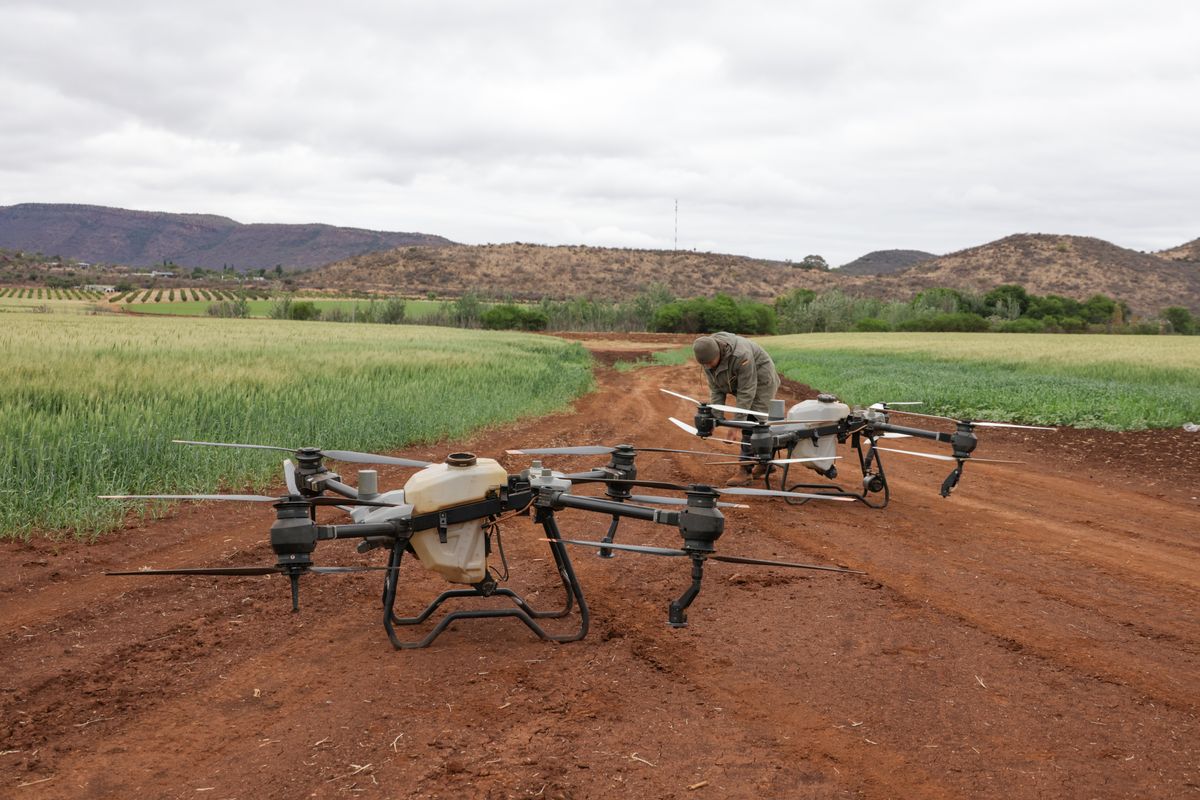
Illustrative editorial photograph · Pexels. Not a photograph of a marketplace listing.
A precision-agriculture specialist may need an extended Nebraska presence for customer discovery, approved field observations and implementation handover. The opportunity connects to monthly living through those real tasks, rather than an assumption that farm data is freely available.
The business question in Nebraska precision-agriculture is not just whether a sensor, map, or dashboard works; it is who controls the field records after the machine leaves the yard. For a startup that handles yield maps, planting prescriptions, drone imagery, soil samples, or machine telematics, data ownership and interoperability can matter as much as agronomy. Nebraska is a useful place to ask that question because the state has both a dense farm economy and a university research network that is explicitly built around production-scale testing, including Nebraska Extension’s statewide reach and the University of Nebraska–Lincoln’s NFarms initiative near Mead.
A Nebraska home while a farm-data pilot is evaluated
Locate the farms, customer offices and authorized meeting destinations before choosing a Lincoln-area or other base. Confirm ordinary living and internet needs, while keeping protected field data and commercial equipment within their approved arrangements. Month ‘n’ More helps you find furnished monthly stays and contact owners about the actual home and your dates; it does not place workers or award business contracts.
Owners should describe household access and facilities truthfully, without promising farm access, equipment-yard use or a role in an agricultural technology program. If the home is suitable, list a furnished monthly property on Month ‘n’ More and describe only what you can genuinely offer. This is a possible use case to evaluate, not measured or guaranteed rental demand.
precision agriculture, data ownership, and the first contract question
In this market, precision agriculture usually means collecting and combining data from tractors, combines, sensors, software platforms, and agronomic services. The business model often looks simple on the surface: a grower pays for scouting, mapping, or decision support. But the real deal terms live underneath the subscription or service fee. Who may store the records? Who can reuse anonymized data? Can the vendor analyze it across seasons? Can the customer export it in a usable format if the relationship ends? Those are data ownership questions, and in Nebraska they are especially important because producers often work across large acreages, multiple machines, and several service providers. A Nebraska startup should treat the first contract as a data governance document, not just a price quote. If a company’s platform cannot clearly state how customer data is accessed, transferred, deleted, and combined, it is inviting distrust. That is where interoperability becomes commercial, not technical. A system that cannot exchange files cleanly with a grower’s existing equipment or agronomist’s workflow may still be a good prototype, but it is not yet a scalable business.
Why Lincoln and Mead matter for product design
Lincoln matters because it is the state’s institutional center for university ties, policy discussions, and ag-tech talent. Nebraska Extension’s public site says it is distributed across the state with 83 county offices, 350 experts, and 4 research and education centers, which tells a founder something practical: support, feedback, and field contacts are not confined to one city. The same system says its mission is to connect Nebraskans with university resources, research, and innovation. That matters because precision-ag founders need users who can critique a product from the standpoint of crop performance, farm workflow, and season timing, not just software features. Mead matters because NFarms is not a lab demo. The University of Nebraska–Lincoln described NFarms as operating at commercial scale on more than 3,000 acres at the Eastern Nebraska Research, Extension and Education Center near Mead, with an additional 10,000 acres at ENREEC in the broader system. That scale is relevant to a business deciding whether its tool can survive real production conditions. The article on NFarms also notes the initiative’s emphasis on data management for practical use and efficient automation, which is exactly the kind of environment where a startup can learn whether its platform is usable by actual producers and advisors. See the university’s description of the initiative at NFarms precision-ag innovation and partnerships and Nebraska Extension’s statewide structure at Nebraska Extension from the University of Nebraska–Lincoln.
interoperability as a business moat, not an IT feature
For a Nebraska precision-ag data business, interoperability is not a nice-to-have technical term. It is the difference between a pilot and a repeat customer. If field data can move between equipment brands, agronomy software, and advisory reports without constant manual cleanup, the customer sees less friction and more utility. If it cannot, the operator may still use the tool for a single season, but the switching cost will be low. That creates a clear strategic choice. A company can build a closed system and try to own the entire workflow, which may simplify support but narrows adoption. Or it can build a narrower product that plays well with existing platforms, which may speed trust and integration but require stronger product discipline. In Nebraska, where farms may have accumulated mixed fleets and multiple advisers over time, the second path often has better odds unless the founder has a very specific buyer with uniform hardware and a narrow use case. The commercial trade-off is real: interoperability increases development complexity, but it can reduce customer resistance, limit duplicate data entry, and make the service easier to adopt across a region. A company that ignores it may find that its best sales pitch is not agriculture at all but migration labor it has forced onto the customer.
A hypothetical first project: data rights and nitrogen maps
Example: a two-county Nebraska startup offers a service that turns machine data, soil sampling, and imagery into variable-rate nitrogen recommendations. Its first customer is a mid-sized corn and soybean operation that wants one season of decision support, not a multiyear platform commitment. The startup’s contract says the grower owns identifiable field records; the startup may retain de-identified performance data only for product improvement; the customer may export raw files in a standard format; and the advisory output can be reviewed by the grower’s consultant. Success metric: by the end of the first full season, the customer can import and export files without manual reformatting in most cases, and the grower’s agronomist confirms that the recommendation reports match field boundaries, application records, and season notes well enough to support a repeat purchase discussion. Stop/no-go condition: if the startup cannot reliably move data from at least one common equipment-and-software combination into its workflow without repeated hand intervention, or if the customer refuses the data-use terms after legal review, the company should pause expansion and redesign the data governance and import pipeline before adding more clients. That example is intentionally modest. It does not assume a miracle yield boost, and it does not claim a guaranteed return. It tests whether the product solves a data-transfer and decision-support problem that the customer is willing to keep paying for.
field trials, proof, and the line between research and selling
Field trials are where Nebraska can help, but they are not automatic permission to commercialize. A founder may use university research settings, extension contacts, or producer partnerships to learn whether a model is robust, but that does not mean the platform is validated for every farm or every season. The NFarms materials emphasize public-private partnerships and commercial-scale testing, which is valuable for learning whether a system performs under real operational pressure. Still, a pilot at a research site is not the same thing as a customer deployment. That distinction matters for claims and for liability. A startup can say it conducted field trials, but it should be careful about implying that a trial proved broad effectiveness. It also should not treat a research relationship as a shortcut to procurement, certifications, or special facility access. If a product touches agronomic recommendations, machinery data, or farm records, the founder should ask qualified legal and sector-specific advisers how to draft customer terms, limit misuse, and allocate responsibility for data errors.
Relocation and housing choices tied to the actual work
A precision-ag data founder does not need to live on the farm, but the work site affects where temporary housing makes sense. If your first customers are near Lincoln, your product work may center on meetings, software iteration, and occasional travel to county offices or producer sites. If your first proof points depend on commercial-scale observation near Mead, you may need access to both Lincoln and the eastern Nebraska corridor. In that case, a short-term furnished stay in Lincoln can be sensible while you test the market, because it puts you closer to university, business, and service networks. If you expect repeated early-morning visits to field sites, a place that minimizes one-way backtracking may be more practical than a downtown address. For that temporary setup, a monthly stay search can be useful, but only as a housing discovery tool. Search furnished monthly stays in Nebraska if you need a calendar-month stay while you validate the business and learn the commute pattern. If you already own a suitable property near your target route and are thinking about welcoming a founder, consultant, or analyst as a monthly guest, list your place for monthly use. Neither option guarantees availability or workspace suitability, so the final choice still depends on the actual visit schedule, equipment you carry, and whether your work requires quiet calls, late data review, or early departures to field locations. The housing decision should follow the business geography. A team that lives too far from its field-trial sites may waste time and money on logistics. A team that lives too close to one customer cluster may miss better buyers elsewhere in the state. Lincoln is often the practical first base because it is a central institutional node, but a final move should wait until the company knows whether its recurring work is centered on product development, producer support, or repeated on-farm deployment.
Operational due-diligence checklist for Nebraska founders
- Map every data category you will collect: machine logs, geospatial files, imagery, soil data, recommendation outputs, and support notes. Decide which items are customer-owned, vendor-retained, or jointly governed.
- Test interoperability against the equipment and software actually used by your first target buyer. Ask whether export is standard, whether formats are documented, and whether manual cleanup is required.
- Draft a customer-facing data use clause that explains access, retention, anonymization, deletion, and offboarding. Have qualified legal counsel review it before selling.
- Separate field trials from commercial claims. Label pilots as pilots, document the conditions, and do not imply that a research result guarantees farm-wide performance.
- Estimate operating burden before capital spending. If your model depends on frequent site visits, device support, or custom integrations, make sure the service price can cover that work without assuming future volume.
What Nebraska Extension and university partnerships can actually do
Nebraska Extension’s statewide structure, with 83 county offices, gives a founder a practical channel for learning how growers think and how local conditions vary. That does not mean Extension is a sales arm for private software, and it does not mean endorsement. It does mean a company can better understand the agricultural workflow it hopes to serve. The university’s NFarms initiative, launched publicly in 2024 and later tied to a 2025 facility milestone, points to a broader state interest in production-scale precision-ag testing. The university also describes the USDA’s $160 million National Center for Resilient and Regenerative Precision Agriculture at Nebraska Innovation Campus as a collaborative opportunity with a digital-agriculture focus. Check its current development and partnership status directly rather than assuming access is available. These resources do not create guaranteed grants or contracts. Current eligibility, application status, and partnership terms must be verified through the linked institutions. For a Nebraska precision-ag data business, the practical decision may be where to stage the first customer-validation period. If your product needs university-informed evaluation and repeated field visits, assess a Lincoln base against the actual authorized destinations. If your product is still unstable on interoperability or unclear on data ownership, do not expand the territory yet. Build the governance terms, run the approved field trials, and choose the housing pattern only after the workflow proves where the work really happens.
For the local context and services discussed here, consult Nebraska Extension - University of Nebraska–Lincoln and NFarms groundbreaking highlights precision ag innovation, partnerships | NFarms Initiative | Nebraska. Check current availability and eligibility with the responsible organization before making a business or relocation commitment.
Make your next month feel more settled.
Related reading

Omaha Work Stays: Get Expense Paperwork Right
Omaha work stays create expense-paperwork decisions around receipts, employer rules, and trip purpose; this guide helps you document monthly stays cleanly.

A relocation checklist for your temporary home
A steady, step-by-step plan for finding a place, organizing arrival and making the first few days in a new city less hectic.