Detroit vehicle-software testing businesses: build an offer around one failure mode
A Detroit-focused guide to vehicle-software testing businesses, with a niche offer, permitting context, relocation choices, and a worked first-project example.
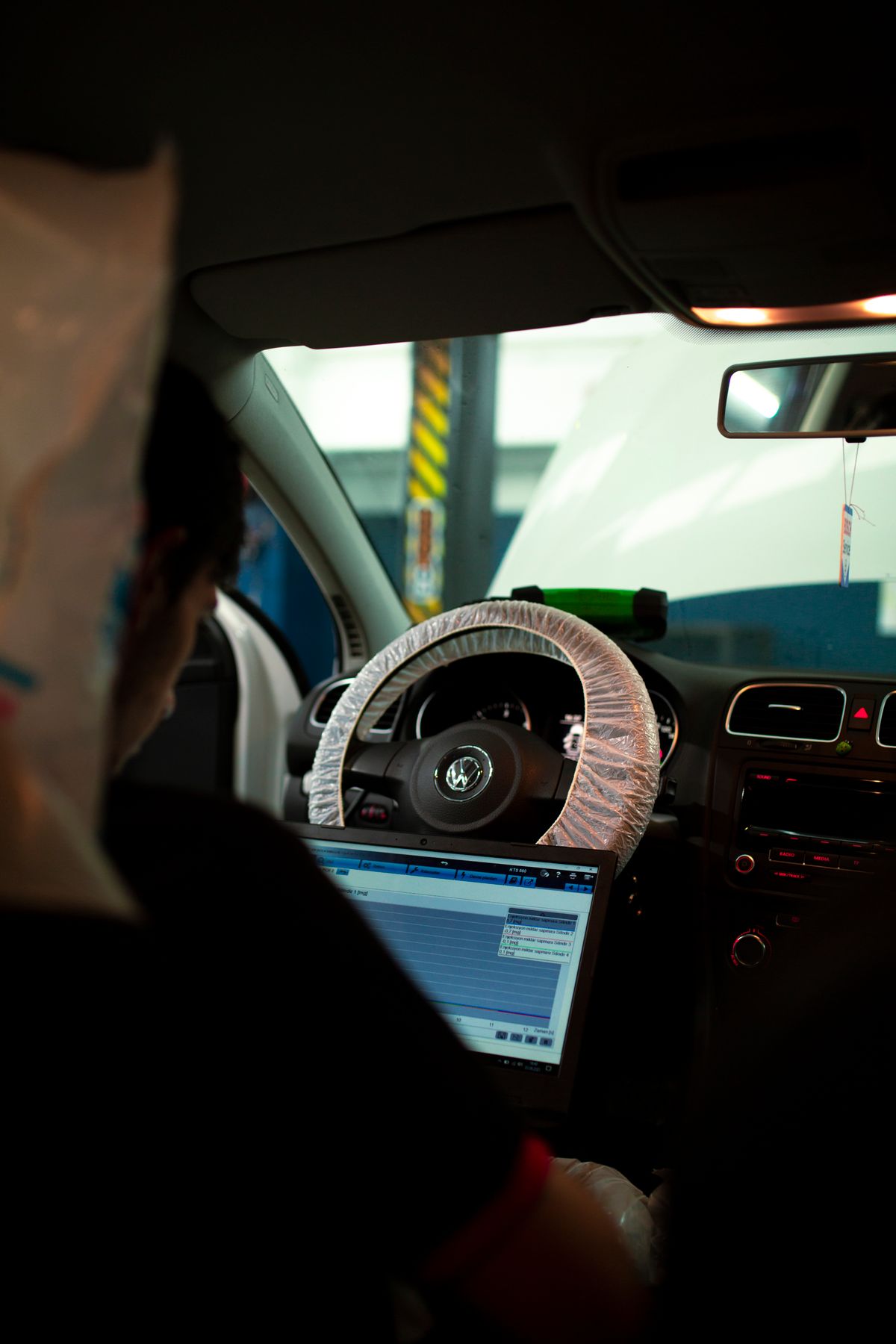
Illustrative editorial photograph · Pexels. Not a photograph of a marketplace listing.
A vehicle-software specialist may spend a sustained period in Detroit coordinating an approved test pilot and customer handover. The connection to monthly living is the person’s temporary assignment, not permission to test vehicles or access a mobility program.
A vehicle-software tester in Detroit does not need to sell “testing” in the abstract. The sharper business is a paid offer around one failure mode: finding, reproducing, and documenting how a feature breaks in the kind of weather, traffic, and regulatory setting that Detroit actually gives you. That matters because buyers do not pay for generic drive time; they pay for evidence that their vehicle software survived a specific operating condition, with a record they can use internally and, when needed, for compliance conversations.
A Detroit home while a vehicle-software pilot is completed
Use the actual meeting and authorized test destinations to choose a base. Ask about ordinary parking, sleep conditions and internet, while keeping prototype vehicles, sensitive test data and commercial experimentation within their approved arrangements. Month ‘n’ More helps you find furnished monthly stays and contact owners about the actual home and your dates; it does not place workers or award business contracts.
Owners should describe actual household parking and living features, without promising vehicle-testing rights, secure garage suitability or mobility-company endorsement. If the home is suitable, list a furnished monthly property on Month ‘n’ More and describe only what you can genuinely offer. This is a possible use case to evaluate, not measured or guaranteed rental demand.
Detroit vehicle software and the narrow offer that is easiest to sell
Detroit is a place where mobility work is unusually concrete. The city’s Transportation Innovation Zone says it was created to bridge mobility innovation and regulatory compliance, and it covers roughly two square miles around Michigan Central, including Corktown, North Corktown, and Hubbard Richard. The zone also spans corridors such as Michigan Avenue and connects to I-96, I-75, the Detroit River, and U.S.–Canada border crossings, which tells you something important: the testing value is not only software logic, but software under real routing, street, and handoff conditions. See the city’s own overview at Transportation Innovation Zone | City of Detroit.
That geography suggests a business model built around scenario validation, not a broad consulting practice. For example, instead of offering “autonomous vehicle testing,” offer a package like fog-and-salt-road sensor validation, low-speed urban curb interaction testing, or remote-diagnostics failure reproduction for fleet operators. Those are narrower than a full lab program, but they are easier to scope, easier to price by project, and easier to explain to a buyer who already has an engineering team and needs a specific gap closed.
Detroit and the test environment: what the local setting changes
The local advantage is not just industry presence; it is the ability to build a test environment around a known city system. The Transportation Innovation Zone page says the city already has over a dozen permitted pilots in areas such as EV charging, connected vehicle infrastructure, and mobility data systems. That is not proof of demand for your exact niche, but it is proof that Detroit has a functioning pathway for pilots and that the city has organized a real-world deployment process rather than leaving innovators to negotiate one-off permissions. The same page also describes a streamlined permitting process with direct access to city partners and a single point of contact, which matters if your service depends on repeatable field tests rather than a one-time demo.
If your work is in vehicle software, “environment” should be read broadly: street geometry, traffic rhythm, weather exposure, parking and staging logistics, and the data chain from test vehicle to analysis workstation. A business testing driver-assistance or fleet software may not need to own a proving ground. It may need a safe, well-documented route mix, a staging location for laptops and hardware, and a repeatable protocol for how logs are collected, anonymized, and handed to the customer. That is a commercial offer, not a promise of access to any facility simply because it is nearby.
Michigan Central as a business context, not a shortcut
Michigan Central helps explain why this niche belongs in Detroit, but it should not be mistaken for a guarantee. A recent local profile describes Michigan Central Station as a 1.2-million-square-foot campus for mobility innovation led by Ford, used as an open platform for startups and tech firms to test autonomous vehicle technology and smart city solutions. Read that as context, not entitlement. The campus can support a dense network of conversations and partners, but you still need your own customer, your own scope, and your own permission path. A useful reference is Michigan Central Station: A Tech Campus in a Cathedral.
The commercial trade-off here is subtle. Being in Detroit can reduce friction in customer discovery and pilot coordination, but the most valuable part of your business is the test method, not the address. If you anchor too hard to the campus narrative, you risk building a business that sounds impressive and closes slowly. If you anchor on one failure mode—say, sensor degradation during low-visibility curbside deliveries—you can sell a narrower deliverable with a clearer pass/fail structure and less capital tied up in broad tooling.
intellectual property, safety, and the legal boundary around testing
Any vehicle-software testing business needs a clear boundary between evaluating behavior and operating a regulated transportation service. Detroit’s Transportation Innovation Zone is explicit that it is a permitting and piloting framework designed to support safety and community engagement. That does not mean every test is automatically allowed, and it does not mean incorporation alone gives you tax, licensing, banking, residency, or procurement advantages. If your product touches safety systems, public roads, or customer data, you will need professional advice on contracts, liability allocation, insurance, privacy handling, and whether your test plan fits the applicable city, state, and federal requirements.
This is where intellectual property becomes a business issue rather than a legal footnote. Buyers of testing services often want logs, defect reports, and reproduced scenarios without exposing source code, calibration details, or proprietary calibration thresholds. Your offer should state how you handle intellectual property, what artifacts the customer receives, who owns derivative test scripts, and how long raw data is retained. In a city with a dense mobility ecosystem, that clarity can matter as much as technical quality because it lowers the buyer’s internal approval burden.
A worked example: one failure mode, one first customer, one stop rule
Example: a startup develops a vehicle-software module that warns fleet drivers when curbside detection is unreliable in heavy precipitation. Instead of marketing broad validation, you sell a four-week pilot focused only on “repeated curb detection failures in wet nighttime pickup zones.” Your deliverable is a short list of reproductions, annotated logs, and a recommendation on whether the customer should keep iterating, expand to a second route class, or pause and redesign. Your success metric is simple: the customer can reproduce at least one high-priority failure mode on demand and can demonstrate a measurable reduction in that failure after code changes or sensor tuning. Your stop/no-go condition is equally simple: if you cannot reproduce the issue in the agreed test environment after the agreed number of runs, or if the customer cannot make a code change that alters the result, you stop and declare the pilot inconclusive rather than stretching it into a vague retainer.
Commercially, this is attractive because it avoids the trap of selling hours. The buyer is not paying for endless field time; they are paying for evidence. Your operating cost then becomes the real question: can you stage tests, handle data, and document outcomes without sinking money into custom vehicles, long leases, or a staff size that assumes a larger pipeline than you have? In early months, a lean model usually wins: use borrowed or customer-provided hardware when possible, keep the route and scenario library narrow, and charge by milestone rather than by open-ended time.
Operational due diligence before you sign a pilot
- Confirm the exact test scenario, location, hours, and who is responsible for road or site permissions; do not assume city interest equals authorization.
- Write down what data you will capture, who can access it, where it will be stored, and how intellectual property rights are handled after the pilot ends.
- Identify whether the buyer needs a report for internal engineering, executive review, insurer review, or a regulatory file, because each one changes the deliverable.
- Check whether the work depends on weather, traffic, or fleet availability that could shift the pilot window and raise cost.
- Ask whether the customer expects you to bring hardware, drivers, sensors, or logging systems, because that changes capital exposure and liability.
Relocation and housing decisions tied to the work site
For a short-term launch, where you live should track the testing rhythm, not just the cheapest rent you can find. If your field work is centered near Corktown or the Michigan Central area, you may want a furnished monthly stay that keeps you close enough for early-morning setups, rapid debriefs, and weather-dependent rescheduling. Month-to-month housing can be especially useful when you are still proving whether the first customer’s route, curb, or parking pattern is repeatable. You can search options through monthly furnished stays in Detroit and, if you are a local owner considering a business traveler, list a place through list your furnished place for monthly stays.
The location choice should also reflect customer geography. If your first buyers are near downtown, Corktown, or the mobility corridor around Michigan Central, living nearby can reduce dead time between tests and make it easier to respond when a customer wants another run after a firmware change. If your work shifts toward suppliers, OEM sites, or cross-border logistics, you may decide later that a different neighborhood or a longer stay is justified. The point is not to chase a permanent move on day one; it is to keep housing flexible until your test cadence and customer concentration are clear.
A practical launch path for Detroit vehicle software testing businesses
The best launch path is to pick a failure mode, build a minimal repeatable protocol, and verify that Detroit is the right real-world setting for that protocol before you buy more equipment. Use the city’s permitting information as a checkpoint, not a marketing slogan, and verify current eligibility through the linked resources because programs and pilots change. Detroit’s local mix of mobility policy, campus energy, and street-level complexity makes it a strong place for this kind of business, but only if your offer is narrow enough to be testable and disciplined enough to protect safety, data, and intellectual property. Start with one buyer, one scenario, and one stop rule; if that first pilot produces a clean reproduction and a decision the customer can act on, you have a business. If it only produces general admiration, you do not.
For the local context and services discussed here, consult Transportation Innovation Zone | City of Detroit and The iconic Michigan Central Station has been.... Check current availability and eligibility with the responsible organization before making a business or relocation commitment.
Make your next month feel more settled.
Related reading

Detroit Listings: Photograph Parking, Not Just Rooms
How Detroit monthly-stay hosts should photograph parking access, winter snow-routing impact, and curb-to-driveway details so inquiries match the stay.

A relocation checklist for your temporary home
A steady, step-by-step plan for finding a place, organizing arrival and making the first few days in a new city less hectic.