Worcester biomanufacturing services: choosing a niche outside a Boston laboratory lease
How Worcester’s biomanufacturing support ecosystem shapes niche selection, funding trade-offs, staffing, and temporary housing decisions outside Boston.
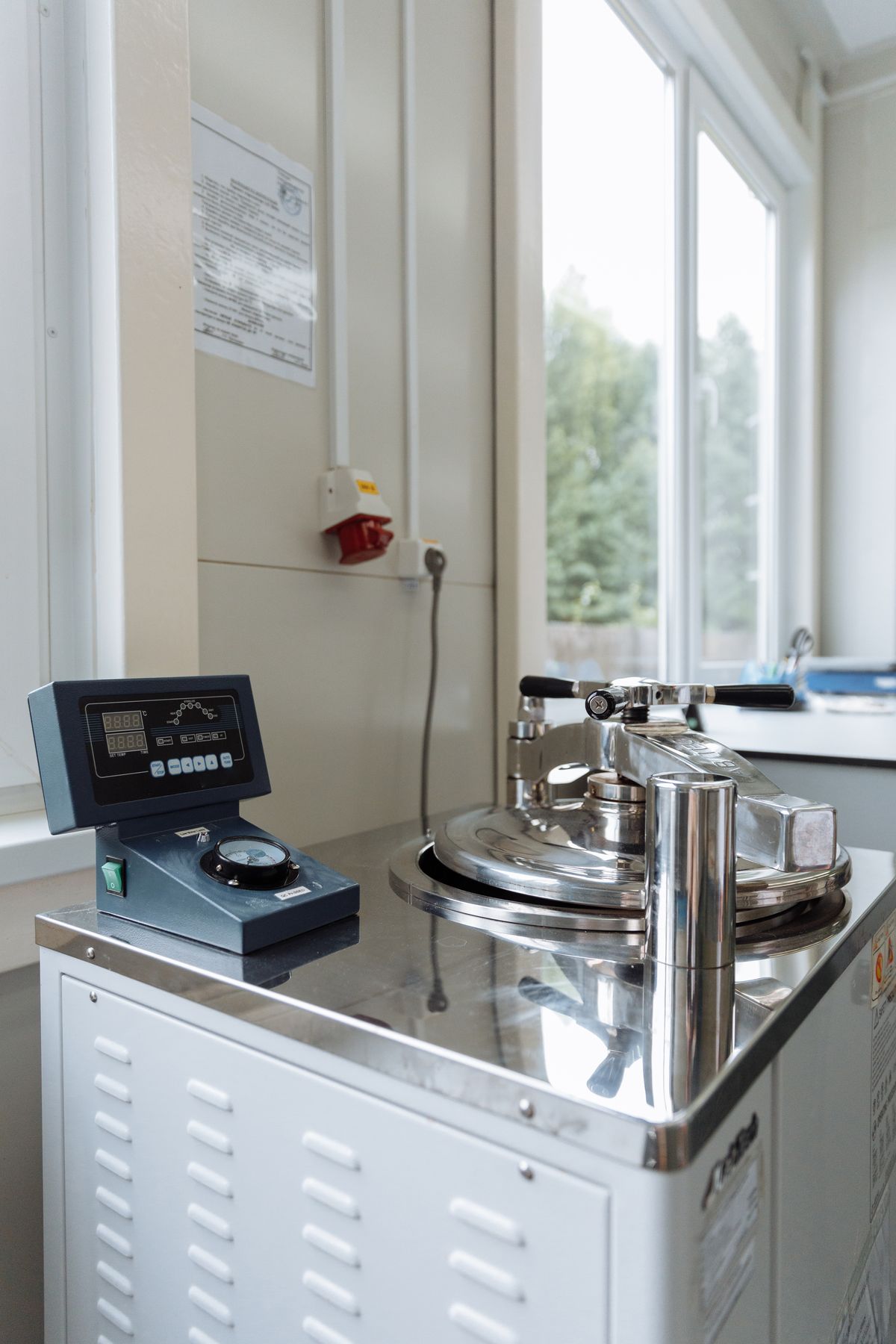
Illustrative editorial photograph · Pexels. Not a photograph of a marketplace listing.
A visiting trainer or documentation specialist exploring Worcester-area biomanufacturing work may need an extended local period before a permanent move. A monthly home can make that period manageable while the business tests a real customer relationship.
A Worcester founder weighing a biomanufacturing services company does not need a Boston wet-lab lease to get started, but the niche has to fit the city’s real advantages: space, workforce development, and proximity to a growing Central Massachusetts biocluster. The practical question is not whether Worcester can replace Cambridge; it is which service lines can be sold from Worcester without taking on a full manufacturing footprint too early. For many small operators, the most realistic starting point is support work around quality documentation, process training, and coordination for lab access rather than owning a complete production facility on day one.
A Worcester home while a biomanufacturing engagement develops
Identify where approved training and work occur before choosing accommodation. Verify ordinary living and transport needs; laboratory access, sample handling and regulated production belong in authorized facilities, not in a furnished rental. Month ‘n’ More helps you find furnished monthly stays and contact owners about the actual home and your dates; it does not place workers or award business contracts.
Owners can describe the rented space for someone on a defined assignment, without promising laboratory access, employer affiliation or a residence approved for life-science operations. If the home is suitable, list a furnished monthly property on Month ‘n’ More and describe only what you can genuinely offer. This is a possible use case to evaluate, not measured or guaranteed rental demand.
Worcester biomanufacturing: the niche question before the lease question
The Massachusetts Life Sciences Center’s Business Builds: Life Sciences program, formally known as BioBoost, makes an important point for this decision: the state is funding capital projects that create or expand biomanufacturing and medtech advanced manufacturing in Massachusetts, not general operating overhead. The program says eligible costs are capital expenses such as buildout, renovation, permanent installation of equipment, and site infrastructure, while salaries and working capital are not eligible. That distinction matters because a Worcester service company may need a modest footprint for document control, sample handling, or client meetings, but if the core value is expertise rather than heavy equipment, the founder should avoid overbuilding the real estate before the market proves out. See the program details in the official Business Builds: Life Sciences description for the current rules and timelines, and verify the posted application window before counting on it in a financing plan.
quality documentation as the first sellable service
For a new Worcester company, quality documentation is one of the most plausible early services because it can be sold to startups that are moving from research habits into manufacturing discipline. In biomanufacturing, the buyer often needs batch record templates, document version control, deviation logs, training records, supplier qualification files, or a lightweight quality management system that can survive customer audits. The work is valuable precisely because it reduces failure risk before a client has built a large internal compliance team. It is also easier to deliver from a modest Central Massachusetts office than a fully outfitted plant. The trade-off is that quality work can be mistaken for generic consulting unless it is anchored in actual process knowledge. A Worcester firm should decide early whether it will support discovery-to-manufacturing transfers, supplier quality, or lot-release documentation, because each buyer type has different expectations for turnaround, confidentiality, and technical depth.
A second local fact makes this more than a theory. In the MLSC’s May 27, 2026 announcement, Massachusetts Biomedical Initiatives in Worcester received $400,000 to work with the Worcester City Campus Corporation on renovating space at the UMass Medicine Science Park. That announcement is not a free pass to facilities or proof that renovated space is available today. The same announcement said the BioBoost awards are designed to strengthen manufacturing capacity, accelerate commercialization, and create career opportunities, including for workers without a bachelor’s degree. For a Worcester services company, it provides context for investigating whether firms need practical help translating research routines into production routines. The full announcement is at the MLSC newsroom release on $3.5 million to expand biomanufacturing in Massachusetts.
training and workforce support without pretending to be a school
Training is another strong niche, but it should be scoped carefully. A small Worcester company can offer onboarding for cleanroom behavior, documentation habits, deviation response, or technology-transfer readiness without claiming to certify workers or replace employer responsibility. That distinction matters because training in this context is operational support, not licensure. The best customer is usually a local startup, contract manufacturer, university spinout, or regional supplier that already knows it needs consistent process behavior but does not have enough internal staff to build the curriculum from scratch. The commercial decision is whether to sell training as a one-off workshop, a recurring compliance support retainer, or a project tied to a specific process transfer. Recurring support can stabilize revenue, but one-off work may be easier to start because it requires less integration with a client’s systems.
This is also where Worcester’s geography matters. Central Massachusetts can make a service business easier to staff than a Boston lab lease, but it also means some customers will expect occasional travel into Greater Boston, the Route 9 corridor, or the 495 belt for on-site meetings, audits, or handoff sessions. If the company’s value depends on same-day in-person response, a founder should not choose housing too far from the work pattern. A temporary monthly stay near the city center, the campus district, or a commuter corridor can be smarter than signing a long lease before the buyer mix is clear. Readers comparing neighborhoods and furnished monthly stays can use Month ’n’ More search to look for calendar-month options, and owners who have a place that could suit a biomanufacturing project team can list your place. That is especially useful if the first project involves a few weeks of site visits, document cleanup, or training sessions rather than permanent relocation.
lab access in Worcester: service model, not facility ownership
The phrase lab access can create confusion. For a services company, lab access may mean a client is asking for coordination around sample receipt, shared instrument scheduling, or access to an external contract lab. It does not mean the company can assume use of university or institutional facilities, and it certainly does not mean a lease near a lab grants entry. This is where the niche choice becomes financial. A company focused on lab access coordination may need less capital and fewer permits than one building its own wet lab, but it must invest more in scheduling, documentation, chain-of-custody practices, and vendor management. If the company plans to touch samples or data, it may also need qualified legal and sector-specific advice about contracts, insurance, biosafety boundaries, and privacy obligations. None of that is solved by simply being in Worcester.
worked example: a first-customer validation project
Consider a hypothetical Worcester startup called Mill Brook BioOps, founded by a former process engineer and a quality specialist. Instead of leasing a Boston lab, it rents a small office and meeting space in Worcester and sells a starter package to a nearby cell-therapy spinout that needs help before an investor diligence process. The package includes document mapping, a draft training matrix, and a review of batch record gaps for one workflow. The success metric is simple: the client can close the document gaps, train the first operator cohort, and pass an internal readiness review without reworking the entire process tree. The stop condition is equally clear: if the client cannot commit to specific internal owners for quality documentation and training, or if the scope keeps expanding into full manufacturing buildout before there is repeatable demand, Mill Brook BioOps should not expand staff or sign a long-term facility lease yet. That is a sensible no-go line because it prevents the founder from confusing interest with repeatable purchasing behavior.
operational due-diligence checklist for Worcester biomanufacturing services
- Map which service line is actually being sold: quality documentation, training, lab access coordination, supplier quality, or transfer support. Do not bundle all of them by default.
- Check whether the client’s work requires on-site presence, secure records handling, or sample logistics that changes the location decision.
- Confirm what capital expenses are truly needed now versus what can wait; the BioBoost program funds capital, not salaries or working capital.
- Review whether any prospective funding or incentive program has a current application period, a match requirement, and a Massachusetts-presence condition before budgeting around it.
- Ask whether the chosen space supports the actual workflow: quiet documentation time, a meeting room for client reviews, storage for controlled records, and predictable access hours for staff and visitors.
- Determine whether temporary housing should be close to Worcester client sites or closer to Boston-area customers, since travel patterns may matter more than rent alone.
The funding side also deserves a realistic reading. MLSC says Business Builds: Life Sciences can award up to ten grants, with awards between $500,000 and $2,000,000 for direct manufacturing scale-up, and applicants must provide a 50/50 match. It also says projects should be economically feasible and that recipients commit to maintaining a location in Massachusetts for no less than 10 years. Those are meaningful terms for a company choosing between a services model and a capital-heavy manufacturing model. If a founder wants mainly to sell expertise, a large matched capital project may be the wrong tool. But if the company’s service line depends on a dedicated training suite, fit-out, or specialized equipment that genuinely changes what it can sell, then the capital route may make sense. The current application period is posted as Aug. 24 to Oct. 1, 2026 at 11:59 p.m. EST, so the reader should verify status directly before treating it as an available financing source.
housing, access hours, and the first year decision
Relocation should follow the service model, not the other way around. A founder who expects day-to-day document work and occasional client visits can start with a furnished monthly stay near Worcester to test commute patterns, parking, and client geography before signing a residential lease. Someone whose first year will include regular site meetings in Central Massachusetts but only occasional Boston trips may prefer to live closer to Worcester and use flexible housing for Boston overnights when needed. If the business later grows into a larger production or support site, the housing decision can change with it. That staged approach matters because a small biomanufacturing services firm often lives or dies on response time, reliable recordkeeping, and the ability to keep overhead aligned with confirmed demand, not on prestige location.
For a Worcester founder, the best decision is usually to start with a narrow, sellable niche, not a broad promise of life-science help. If the company can credibly sell quality documentation, training, and lab access coordination to a defined set of nearby customers, then Worcester can be the right base without a Boston laboratory lease. If the first customer only wants advice in principle, or if the business model requires heavy capital before anyone signs, the safer choice is to stay flexible, keep housing temporary, and wait for a real order before committing to a permanent site.
For the local context and services discussed here, consult Business Builds: Life Sciences - MLSC and Healey-Driscoll Administration and Massachusetts Life Sciences Center Announce $3.5 Million to Expand Biomanufacturing in Massachusetts - MLSC. Check current availability and eligibility with the responsible organization before making a business or relocation commitment.
Make your next month feel more settled.
Related reading

Boston Renovation Stays: Manage Two Homes at Once
How to coordinate a Boston renovation stay when you need temporary housing, a moving truck plan, and the right permit path between two homes.

A relocation checklist for your temporary home
A steady, step-by-step plan for finding a place, organizing arrival and making the first few days in a new city less hectic.