Louisiana coastal-resilience services: finding customers for data, maintenance and field support
How Louisiana coastal-resilience service firms can win data, maintenance, and field-support work by matching CPRA procurement, field access, and Baton Rouge logistics.
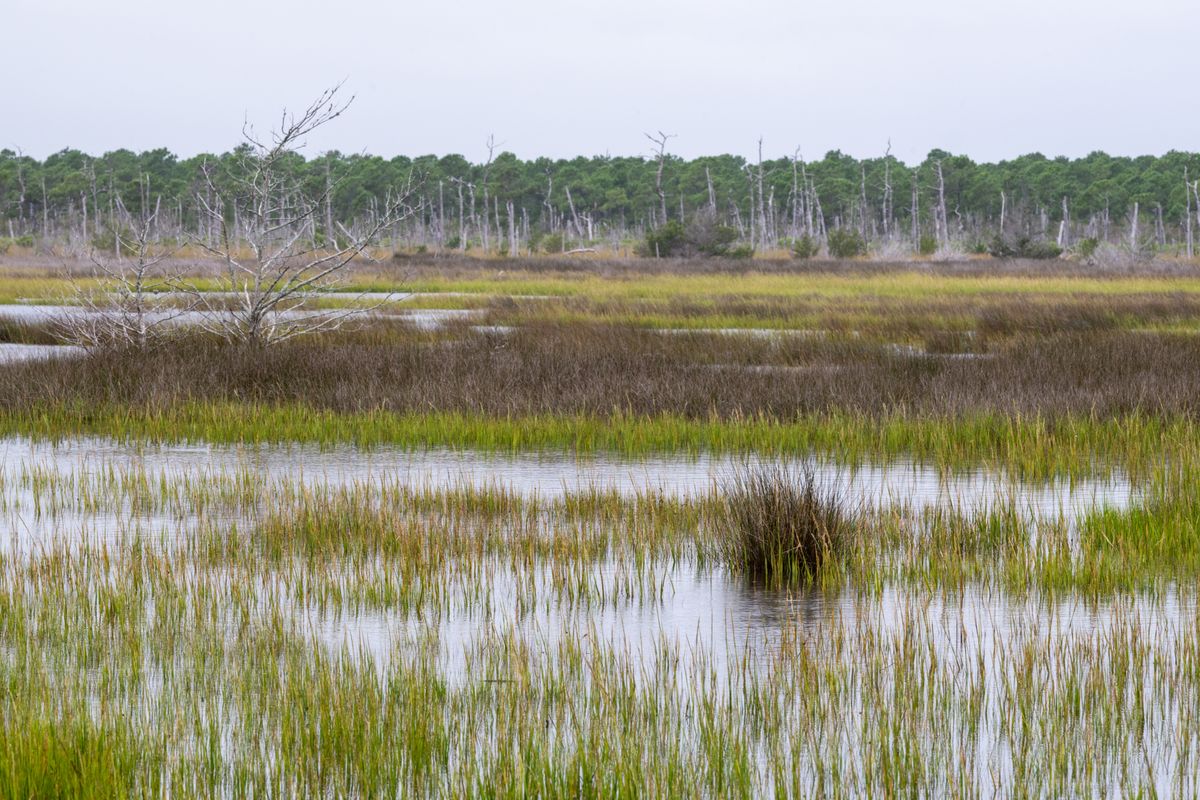
Illustrative editorial photograph · Pexels. Not a photograph of a marketplace listing.
A coastal-resilience engagement may bring a coordinator or specialist to Louisiana for an extended project period. That creates a living need distinct from procurement success, field access and the technical work being commissioned.
Louisiana’s coastal work is not a single market; it is a contracting environment built around maps, project files, monitoring stations, field access, and long public timelines. A small firm selling data services, maintenance support, or field crews has to think like a coastal operator and a procurement bidder at the same time. The most useful starting point is the state’s own project ecosystem: the Coastal Protection and Restoration Authority maintains the Coastal Information Management System, the current Coastal Master Plan, geophysical data, and coastal community resilience information, and it also points users to a mapping tool for future flood risk and related community data through the official state portal at Louisiana business resources. That matters because your first customer is rarely “the coast” in general; it is usually a specific office, consultant team, parish, or asset owner with a defined scope and a paper trail.
A home base for a defined coastal-resilience engagement
Establish the actual office and authorized field destinations before choosing a base near Baton Rouge or elsewhere. Ask about arrival arrangements and the home’s ordinary facilities; use qualified local resources for site-specific safety and emergency planning. Month ‘n’ More helps you find furnished monthly stays and contact owners about the actual home and your dates; it does not place workers or award business contracts.
Owners should describe known property conditions and access accurately, without promising flood safety, uninterrupted field access or a public-project affiliation. If the home is suitable, list a furnished monthly property on Month ‘n’ More and describe only what you can genuinely offer. This is a possible use case to evaluate, not measured or guaranteed rental demand.
coastal resilience work starts with data, not with equipment
For a service company, the best niche is often not dredging or heavy construction. It is the supporting work that keeps coastal projects documentable and operational: GIS cleanup, GPS control checks, marsh or shoreline photo documentation, station visits, asset inventories, permit-condition tracking, vegetation observations, and post-storm condition reports. In Louisiana, that niche is easier to understand because the state emphasizes information infrastructure. The CPRA site highlights project data, the Coastal Master Plan, and the state’s 20 coastal parishes. The resilience portal also points users to a Coastal Vulnerability Assessment and State Agency Coastal Resilience Report Cards, which signals that decision-makers are repeatedly comparing places, risks, and outcomes rather than shopping for one-off visuals. That means a vendor who can turn field notes into audit-ready deliverables may fit better than a generalist mapper.
procurement: where demand is real, and where it is only possible
The focus term procurement is central here because coastal-resilience revenue usually comes from competitive public buying, consultant subcontracts, or task orders. The CPRA homepage explicitly directs visitors to “RFPs, RSIQs – Contracts,” which is a useful sign that the authority buys services through formal solicitations. That is not a guarantee of any open opportunity today, and historical announcements should not be treated as current openings. The practical lesson is narrower: a company should build its offer around bid-ready scopes that are easy to describe, verify, and compare. If your work is maintenance inspection, for example, define exactly what you can document on each visit: access method, station ID, photo set, condition notes, and turnaround time for a field memo. If your work is data support, define file formats, metadata discipline, and QA/QC steps. Louisiana public buyers often need firms that can move from plan to site without converting every task into a custom proposal.
The state’s CPRA website is also useful for reading the market’s direction. Recent news items on that site include the FY 2027 annual plan, a West Bank and Vicinity future levee lifts design agreement, and restoration awards and project announcements. Those are dated project signals, not promises of current work, but they tell you what kinds of services are likely to recur: design support, monitoring, restoration mapping, field verification, and plan updates. If a company is trying to choose between offering broad environmental consulting and a narrower coastal service line, the narrower line is usually easier to price and easier for a public buyer to understand.
field access, station work, and the logistics of getting to site
The phrase field access sounds simple until a team has to reach marsh sites, boat launches, flood structures, or monitoring stations in weather windows and maintenance windows. Louisiana’s official traveler system can matter here because the state’s 511 service provides road conditions, closures, weather-related restrictions, and traffic-camera updates. That is not a business development tool; it is an operational one. A firm that depends on day trips from Baton Rouge or another inland base should plan for access interruptions, fuel burn, and staging time. In coastal work, getting the crew to the site is part of the deliverable.
CPRA’s public materials also mention Coastwide Reference Monitoring System stations. That is a clue about the character of the field work: repeated visits, consistent methods, and the need to preserve comparability over time. Companies that build a repeat-visit model can often win over buyers that dislike inconsistent condition reports. The trade-off is that repeatable field work creates fixed costs in vehicles, boats, storage, instruments, and training, while ad hoc consulting creates more billing flexibility but less operational discipline. For many small firms, the decision comes down to whether they can support a standing field calendar across the coast without overcommitting on equipment they will not use every week.
Baton Rouge as an operating base, not a trophy address
Baton Rouge matters because it is close enough to many state agencies to reduce friction in meetings and submittals, but inland enough to give a service firm a more stable office, storage, and hiring base than a low-lying coastal address. That does not mean everyone should move there immediately; it means a Baton Rouge office can be the practical bridge between proposal work and field deployment. A firm that sells data processing, project controls, inspection support, and light maintenance coordination may not need to live on the coast full time, but it does need a place where staff can sort equipment, process notes, and respond to procurement deadlines. The fact that the question is centered on Baton Rouge is useful: you are not asking where to vacation, you are asking where to stage a business that will spend part of its time in coastal parishes and part of its time in offices, conference rooms, and data systems.
That also shapes relocation and housing decisions. If your first projects are weekly site visits and Baton Rouge-based meetings, a furnished monthly stay near your office or the state-government corridor can make sense before a permanent move. For that kind of test period, use Month ’n’ More search to look for a monthly stay that fits a field-work schedule, and if you already own a house or duplex near your service area, list your place so another temporary resident can cover part of your carrying cost. The point is not instant booking; it is to avoid locking yourself into a long lease before you know whether your work mix is 70 percent Baton Rouge meetings and 30 percent marsh sites, or the reverse.
A hypothetical first customer example for Louisiana coastal-resilience services
Example: a two-person firm based in Baton Rouge offers post-storm site documentation and maintenance reporting for a parish or contractor supporting restoration projects in one of the state’s 20 coastal parishes. The firm proposes a three-visit pilot after a weather event: one initial assessment, one follow-up condition check, and one final photo-and-notes package that can be attached to a larger project file. The pricing model is a fixed fee for the package plus a separate charge for any extra travel or return access that the buyer requests. The success metric is simple: the buyer accepts the deliverable set without requesting a full rewrite, and at least one of the three visits produces usable documentation on the first submission. The stop/no-go condition is equally simple: if the buyer cannot define access, acceptance criteria, and response time before the first field day, the firm stops the pilot rather than absorbing open-ended revision work.
That example shows why commercial choices matter. Fixed-fee pilots favor buyers who know their own scope, but they can punish a vendor if field access is delayed or if the site requires repeated revisits. Time-and-materials billing reduces that risk, but it can be harder for public or quasi-public buyers to approve. A hybrid model often works better in coastal resilience: a defined base package with clear assumptions, plus a short list of pre-priced add-ons for extra station checks, reshoots, or revised map layers. The integration question is also real. If the buyer uses GIS, asset-management, or document-control systems, your deliverable should fit those systems rather than forcing manual re-entry.
operational due diligence before you bid
- Confirm exactly which office, parish, consultant team, or owner you are serving, and what proof of need they can actually provide in the solicitation or scope.
- Check whether your task requires field access permissions, escort rules, safety orientation, or special scheduling windows before you promise a crew date.
- Map the route from your base to the site and test how weather, road work, and closures could affect the visit window using Louisiana’s 511 traveler resources.
- Separate data work, maintenance work, and equipment rental into different cost buckets so you do not underprice a pilot by blending every expense together.
- Verify whether the opportunity is a current solicitation, a historical project, or a future plan item; do not treat a plan announcement as an open contract.
- Ask whether the buyer wants raw observations, edited GIS files, or a signed field memo; the wrong file format can destroy usable work even when the site visit is successful.
licenses, training, and the limits of official resources
The state’s business portal and CPRA materials help you identify opportunities, but they do not replace professional advice. Depending on the service, you may need legal review of contract terms, insurance advice on liability and equipment, tax guidance on operating across parishes, or sector-specific advice on environmental sampling, engineering sign-off, or survey standards. Louisiana’s resilience resources page shows how the state organizes resilience reports, vulnerability assessments, and adaptive governance materials, which is useful for understanding the policy context. It does not mean a private firm can use those documents to claim certification, procurement preference, or automatic eligibility. Similarly, being close to Baton Rouge or close to a project site does not grant access to facilities, data, or government systems.
The practical conclusion is that Louisiana can support a durable coastal-resilience services business, but only if the company is built around repeatable field access, clean procurement positioning, and a realistic base of operations. A Baton Rouge staging point with short-term housing is sensible for the validation phase; a permanent coastal move is only sensible after the firm proves that its first-customer package can be sold, delivered, and repeated without scope creep. If the pilot in the example above yields accepted deliverables and a clear next task, expand. If not, keep the business smaller, stay in the monthly housing arrangement, and walk away from the wrong niche before it becomes expensive.
For the local context and services discussed here, consult Business - The official website of Louisiana and Coastal Protection and Restoration AuthorityCoastal Protection And Restoration Authority | Working to achieve a comprehensive coastal protection and restoration Master Plan. Check current availability and eligibility with the responsible organization before making a business or relocation commitment.
Make your next month feel more settled.
Related reading

New Orleans Beyond Sightseeing: A Grocery-First Month
A grocery-first New Orleans month means choosing a stay by food access, streetcar reach, and errand rhythm, not tourist distance or postcard views.

A relocation checklist for your temporary home
A steady, step-by-step plan for finding a place, organizing arrival and making the first few days in a new city less hectic.