Indianapolis life-science cold-chain services: validating handoffs before buying equipment
An Indianapolis-focused guide to validating life-science cold-chain handoffs before equipment purchases, with local ecosystem facts, trade-offs, and a first-project test.
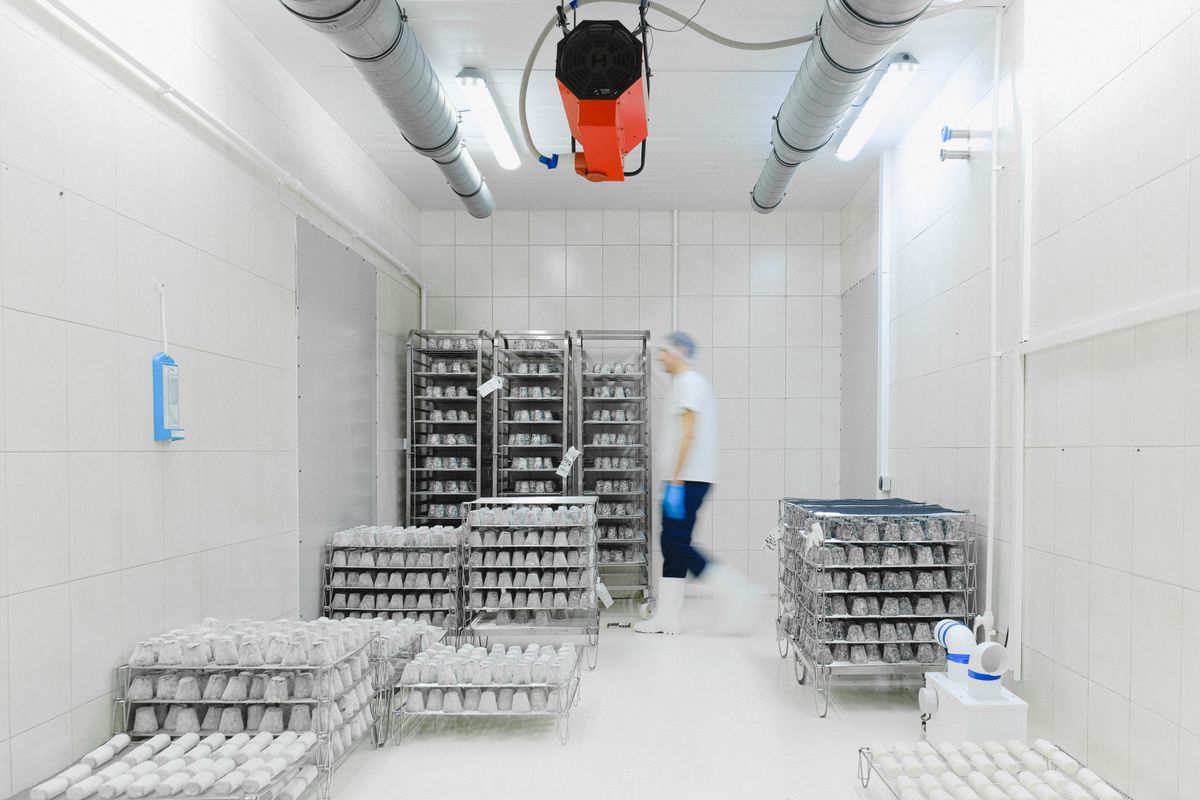
Illustrative editorial photograph · Pexels. Not a photograph of a marketplace listing.
A specialist supporting a life-science cold-chain project may need an extended Indianapolis presence to observe authorized handoffs and coordinate validation. Monthly housing supports the person’s daily life; it is separate from the storage and transport infrastructure being evaluated.
A cold-chain service in Indianapolis succeeds or fails on what happens between buildings: the pickup dock, the packing bench, the driver’s trunk, the receiving counter, and the moment someone signs off on the temperature records. For a new operator, the smartest early question is not which freezer to buy first, but which handoffs need to be validated before any equipment purchase locks you into the wrong service model.
An Indianapolis home while cold-chain handoffs are validated
Plan exact dates around the approved engagement, and confirm ordinary access, parking and internet. Biological samples, temperature-sensitive materials and clinical records belong in their approved environments, not in a furnished home’s refrigerator or spare room. Month ‘n’ More helps you find furnished monthly stays and contact owners about the actual home and your dates; it does not place workers or award business contracts.
Owners can offer accurate living details for a temporary professional, without portraying household appliances as validated cold storage or claiming life-science company affiliation. If the home is suitable, list a furnished monthly property on Month ‘n’ More and describe only what you can genuinely offer. This is a possible use case to evaluate, not measured or guaranteed rental demand.
Why Indianapolis is a practical place to test cold-chain handoffs
Indiana’s life sciences base is unusually relevant to this kind of business. BioCrossroads says Indiana is the nation’s top exporter of life sciences products, with $36B in total life sciences exports and $29.5B in pharmaceutical exports, and it cites more than 70,000 people employed across 3,300+ life sciences establishments. Those figures matter because a cold-chain operator does not need a generic logistics market; it needs enough lab, manufacturing, and distribution activity to create repeated handoffs that justify disciplined validation. Indianapolis sits at the center of that traffic, and BioCrossroads also identifies the Indiana Biosciences Research Institute as an Indianapolis-based, industry-led collaborative research institute. If you are selling a service that protects product integrity rather than moving boxes, the local ecosystem is the demand signal that makes controlled piloting worth doing. See BioCrossroads’ life sciences in Indiana overview for the sector framing and its regional life sciences and innovation hubs page for how the state describes regional activity.
That local density does not prove your niche. It does, however, make Indianapolis a sensible place to study whether the immediate need is courier transport, short-hold staging, package prep, temperature monitoring, or managed receipt-and-release documentation. In cold-chain work, the most expensive mistake is often buying capacity before you know which handoff is failing.
What the service really sells: custody, records, and response time
A life-science cold-chain service is not just a vehicle or a freezer. It is a custody process. Buyers care about whether a shipment remains within its required range, but they also care about who touched it, when the transfer happened, whether the chain of custody is complete, and whether the paperwork or digital record can survive an audit. That is why temperature records are central. The record is not decoration; it is the proof that the chain stayed controlled and that any excursion was detected, logged, and handled according to the client’s procedure.
In practice, that means your product offering may need to separate three layers: physical transport, documentation, and exception management. Some clients only need local pickup and delivery. Others need a handoff service where samples move from a production suite to a receiving dock with documented time stamps and verification. Still others need validation support for packaging configurations or route changes. Each layer has different operating costs and different liability exposure, and the right layer to sell depends on where Indianapolis buyers feel the pain.
Validation comes before equipment: define the handoff you can prove
Validation is the discipline that keeps a service from promising more than it can demonstrate. Before buying a refrigerated van, benchtop cooler, or alarmed storage unit, map the actual handoffs you intend to support. Which transfers occur inside a building, which require courier movement, which need a temperature-controlled waiting period, and which simply need chain-of-custody documentation? The answer determines whether you need insulated shippers, active refrigeration, validated packaging, or just a disciplined receiving workflow.
This matters because not every apparent cold-chain need is a transportation problem. A buyer may have an unreliable receiving process, a lab that closes before carriers arrive, or staff who cannot complete a transfer at consistent times. Solving that with expensive equipment can hide a process problem. In Indianapolis, where the life-science ecosystem includes manufacturing, diagnostics, and collaborative research activity, many first customers will care as much about predictable handoffs and temperature records as about distance traveled.
- Map each transfer point and name the person responsible for release, receipt, and exception escalation.
- Decide which records must be created at pickup, during transit, and at delivery, and who reviews them.
- Validate the weakest handoff first; do not buy equipment until the failure mode is clear.
- Treat any proposed temperature range as client-specific and documented, not assumed from the industry label.
A worked example: an Indianapolis startup validating one route
Example: a two-person Indianapolis startup wants to serve local biotech and diagnostic clients that need same-day movement of temperature-sensitive materials between a lab cluster and a nearby processing site. Instead of buying a fleet, the company runs a six-week pilot on one corridor with one packaging configuration and one documented handoff protocol. The service promise is narrow: pickup within a defined time window, continuous temperature logging during transit, and a signed receipt with record reconciliation at delivery.
Success metric: at least 98% of pilot shipments arrive with complete temperature records, documented handoff times, and no unresolved chain-of-custody gap. Secondary metric: client staff can identify the service as easier to receive than their current process. Stop/no-go condition: if the pilot shows repeated documentation gaps, unstable handoff timing, or recurring excursions tied to the same route or packaging choice, the startup pauses equipment purchases and redesigns the process before scaling. That is the right moment to add capital only if the validation shows a fixable service pattern, not a one-off exception.
The commercial trade-off is straightforward. A more robust packaging system can reduce excursion risk, but it can also increase per-shipment cost and handling time. A larger vehicle fleet can widen your service area, but it may add idle expense if most demand is concentrated near Indianapolis. A cloud logging platform can strengthen traceability, but it only helps if staff actually review exceptions and retain the records in a customer-ready form.
How buyers in Indianapolis are likely to compare vendors
The buyer’s first comparison is rarely price alone. It is usually reliability versus flexibility. A larger operator may offer more capacity, but a smaller Indianapolis-based service can compete if it gives faster response on handoffs, clearer temperature records, and tighter communication with local receiving teams. That said, local proximity is only valuable when it improves the receiving window or reduces the number of uncontrolled transitions. Proximity that does not change the handoff is not a differentiator.
A second comparison is whether you are selling transport, managed staging, or validation support. Transport has the simplest story and the most obvious competition. Managed staging can be useful where receiving hours are short or where multiple deliveries must be consolidated. Validation support is narrower but may be more defensible because it ties directly to the client’s internal quality process. Each model changes insurance needs, training burden, and the level of documentation you must retain. If your business crosses into regulated transport, storage, or sample handling, you will need qualified legal and sector-specific advice before promising compliance-ready service.
Due diligence before buying equipment or signing a route
Before capital is committed, check the operational basics that make validation real rather than cosmetic.
- Confirm the client’s required range, exception thresholds, and record-retention expectations in writing; do not infer them from product type alone.
- Test whether your planned pickup and delivery times fit the buyer’s actual receiving hours, including any early-close or limited-access sites.
- Review who owns the handoff at each step: shipper, courier, receiver, or a third-party coordinator.
- Ask whether the route needs passive packaging, active cooling, or only documented transfer control; each choice changes cost and maintenance.
- Verify how temperature records are exported, stored, and reviewed, and whether clients need paper, digital, or both.
- Check insurance, contractual liability, and any state or federal handling requirements with counsel before offering a service promise.
- Map failure response: if a shipment warms, who is notified, what gets quarantined, and who authorizes next steps?
Relocation and housing: where to stay while proving the workflow
If you are launching in Indianapolis, the best temporary housing is usually the one that matches your operating day, not the one with the nicest marketing photos. A founder who must inspect morning pickups, meet receiving staff, and troubleshoot evening deliveries should favor a furnished monthly stay with easy access to the corridor where the first customers are concentrated. Month-by-month living near the work site can reduce the number of unproductive crossings of the city while you are still learning the route pattern. You can look at monthnmore.com/search to see furnished monthly stay listings and compare them against your operational footprint; if you already host a furnished place near the area and want to support this kind of use, list your place on Month ’n’ More. Exact calendar-month dates matter here: if your pilot runs from the 3rd to the 31st, that is a different occupancy decision than a generic 30-day assumption.
This housing choice should be tied to the work, not the neighborhood brand. If your first clients are near an industrial or research cluster, you may want a place that shortens early starts, allows secure storage for logs and spare labels, and makes after-hours issue response practical. Do not assume that a residential stay is suitable for equipment staging or business operations; confirm the property’s rules and use limitations directly with the owner or manager. The point of the temporary stay is to let you validate handoffs and temperature records efficiently before you commit to a permanent lease or a vehicle purchase.
The decision point: prove the handoff, then scale the asset
Indianapolis makes sense for this business if you can identify a narrow, documentable problem in the local life-science supply chain and solve it better than a generic courier. The city’s sector depth, BioCrossroads’ reporting on exports and employment, and the presence of organizations like IBRI suggest enough activity to support a focused service. But the business should not begin with a large freezer, a fleet, or a broad geography. It should begin with one validated handoff, one set of temperature records, and one customer segment that values proof over volume.
If the pilot shows that the real bottleneck is receipt timing and documentation, not transport distance, keep the service asset-light and invest in process control first. If the pilot shows that passive packaging is insufficient for repeatable compliance, then buy the smallest equipment package that your records justify. In other words: validate the chain, then buy the cold box. For a first move in Indianapolis, that is the disciplined choice.
For the local context and services discussed here, consult BioCrossroads – Igniting IN Life Sciences and Life Sciences IN Indiana – BioCrossroads. Check current availability and eligibility with the responsible organization before making a business or relocation commitment.
Make your next month feel more settled.
Related reading

Bloomington Semester Gaps: Match Housing to IU Dates
How Bloomington students can time monthly housing around Indiana University semester gaps, break windows, and registration dates.

A relocation checklist for your temporary home
A steady, step-by-step plan for finding a place, organizing arrival and making the first few days in a new city less hectic.