Sacramento-area clean-tech pilots: proving an energy idea before relocating the team
Sacramento clean-tech pilots need utility access, pilot-site fit, and relocation timing—this article maps a practical path before moving the team.
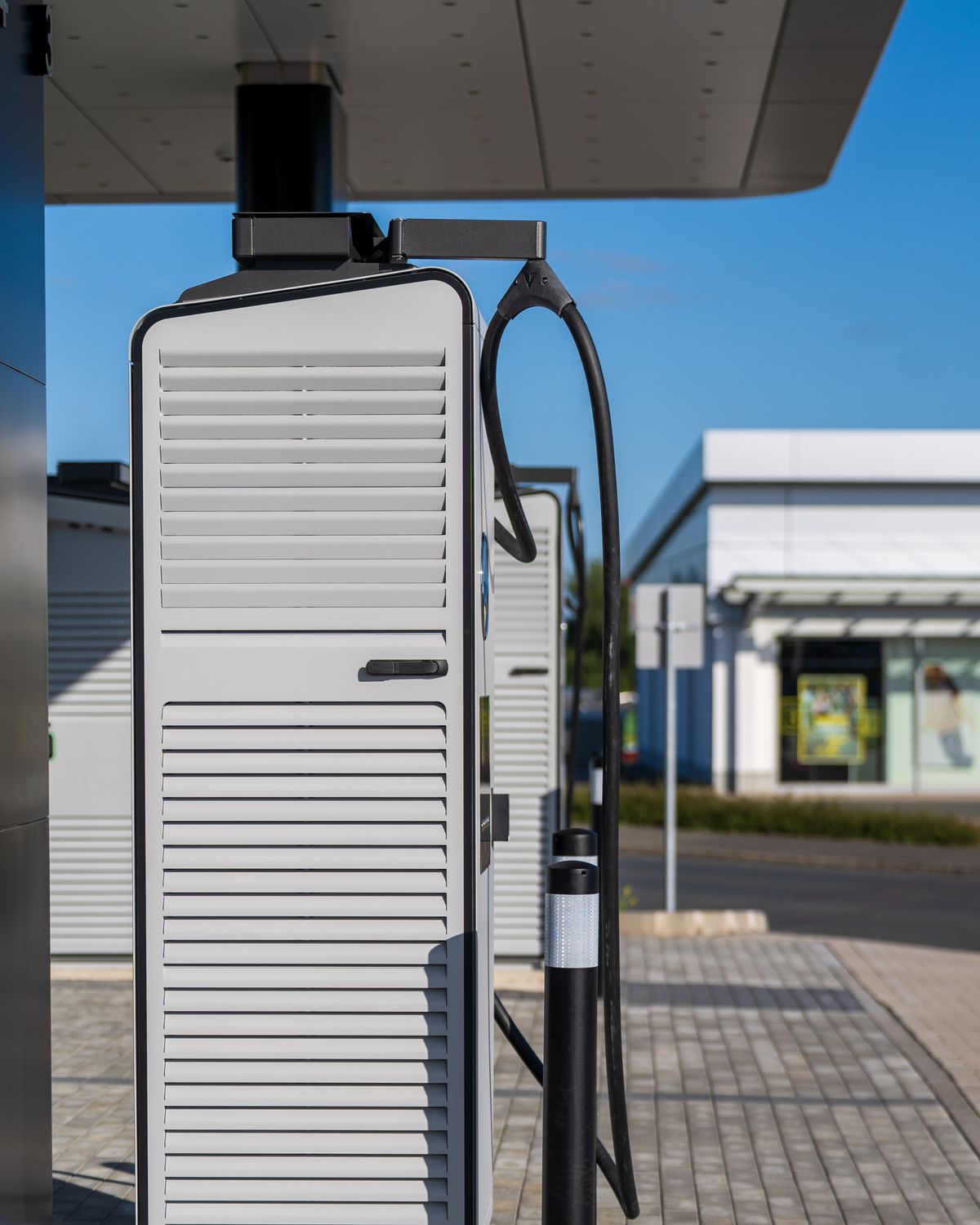
Illustrative editorial photograph · Pexels. Not a photograph of a marketplace listing.
A clean-tech pilot may require an extended coordination period involving a demonstration site, a customer and outside specialists. A founder or visiting engineer can separate that temporary living need from a decision to relocate permanently to the Sacramento area.
A clean-tech team that wants to prove an idea in Sacramento has a useful advantage: the region is already a working market for utility-facing pilots, not just a place with favorable rhetoric. The question is less “Can we move there?” than “What can we validate there before we carry payroll, equipment, and housing costs into a permanent relocation?” In California, that distinction matters because a demonstration can open doors while still leaving the hardest parts of commercialization—utility approvals, site controls, installer coordination, and customer adoption—completely unresolved.
A Sacramento living base while an energy pilot is evaluated
Use the approved pilot timetable to choose exact stay dates. Confirm parking and ordinary home-work needs, but keep prototypes, batteries and experimental electrical work at authorized premises. A furnished property does not itself approve a charging or energy experiment. Month ‘n’ More helps you find furnished monthly stays and contact owners about the actual home and your dates; it does not place workers or award business contracts.
Owners should describe existing household features and any actual vehicle-charging arrangement, not market a residence as a laboratory, a pilot site or a guaranteed source of clean-tech tenants. If the home is suitable, list a furnished monthly property on Month ‘n’ More and describe only what you can genuinely offer. This is a possible use case to evaluate, not measured or guaranteed rental demand.
Why Sacramento is a credible pilot geography, not just a nice branding story
The city’s clean-technology ecosystem is not theoretical. The City of Sacramento says the local cluster includes about 200 establishments supporting over 3,000 jobs and $846 million in annual sales, and it notes that the city contains about 25 percent of the region’s clean energy technology establishments. Those facts matter because pilot programs usually need nearby vendors, commissioning help, site hosts, and follow-on buyers who already understand energy data and utility interconnection issues. Sacramento is also tied to major local infrastructure and utility realities: the city page notes that SMUD serves the community with over 10,000 miles of power lines, and the region has been identified as one of the top 10 cities adopting smart grid technology. That combination suggests a market where grid-aware products can be tested against real operating conditions, not just slide decks. See the City of Sacramento’s clean technology and energy overview for the local cluster context.
The California Energy Commission adds a second reason Sacramento is relevant: its Energy Innovation Ecosystem exists specifically to connect clean energy entrepreneurs with funding, training, resources, and expertise. That does not guarantee awards or open solicitations today, but it does show that California has a structured pathway for pilots, prototypes, and utility-adjacent validation. For a team trying to prove an energy concept before relocating everyone, that structure is more important than a generic tech scene.
What the February 2024 CEC meeting suggests about real demand
The February 14, 2024 California Energy Commission business meeting minutes show the state is funding demonstration work in practical categories, not only abstract research. One approved item gave Sacramento Municipal Utility District a $2,812,421 grant to deploy at least 15 direct current fast chargers to support the Sacramento region’s access to charging infrastructure for high-mileage on-demand transportation services, car sharing enterprises, car rental agencies, and the public. That is a local signal about demand: Sacramento is being used as a charging-access test bed for business models that depend on fleet uptime and public visibility. It does not mean your own charger product is a fit, but it does mean the region is already being treated as a pilot site for transportation electrification.
The same meeting minutes also approved other prototype grants, including a $500,000 project for a grid-interactive autonomous clean energy building control system at school campuses and a $500,000 project to demonstrate a real-time aerodynamic modification technology for trucking energy efficiency. These awards show the CEC is willing to back demonstrations that can be measured against utility bills, vehicle energy use, or installation time. That matters for a Sacramento pilot because your concept will need a similarly concrete output—an energy reduction, a control response, a charging reliability improvement, or a deployment speed gain—not a vague claim that the product is green.
Plausible niches versus proven customer demand
It is tempting to read the local ecosystem and assume every clean-tech product belongs there. That would be a mistake. Sacramento clearly has plausible niches: building controls, EV charging, fleet electrification, utility decision support, and construction-adjacent energy services all make sense around SMUD, public-sector campuses, and transportation operators. But plausible niche is not the same as proven customer demand. A school campus, a fleet yard, or a municipal parcel may be technically suitable and still fail procurement, budget, or operations review. The business decision is whether Sacramento gives you enough access to validate the offering cheaply before you commit to long-term staffing and lease costs.
The trade-off is straightforward. A Sacramento pilot can reduce commercial risk if your product needs a utility relationship, local installer coordination, or a transportation use case. But the same geography can slow you down if your product depends on fast enterprise procurement or if the buyer needs a very specific compliance path. California has strong rules, and utility or public-sector pilots often require legal, engineering, and contracting review. If your model depends on incentives, grants, or awards, verify current eligibility through the official resource instead of assuming that a historical award means an open program today.
A worked example: a control-system startup testing a first customer
Example: a two-person startup has built a software layer that reads energy data from small commercial buildings and modulates HVAC behavior around utility price and comfort constraints. Instead of relocating the entire team immediately, it seeks one Sacramento-area pilot site—ideally a modest school auxiliary building, nonprofit office, or small commercial property already engaged with energy management. The first customer ask is not a full platform sale; it is a 90-day demonstration with limited points of integration, existing meter data access, and a single monthly reporting cadence to the site host.
Success metric: the site host confirms that the system can operate through the pilot period without creating comfort complaints or requiring more than a manageable level of manual override, while producing a documented operational change the host considers worth discussing for a second phase. Stop/no-go condition: if the pilot cannot obtain the needed utility data, if the site owner will not allow the system to touch the relevant controls, or if staff time rises enough that the project becomes dependent on custom, non-repeatable support, the team should stop and redesign the product before relocating people or buying hardware. The point is to validate a repeatable commercial pattern, not merely to announce a demonstration.
Where relocation helps—and where it only adds cost
Relocation should follow the operational shape of the pilot site. If your work depends on early-morning site access, meter reading, hardware swaps, or coordination with utility staff, the team should not choose housing based only on downtown preferences. The better question is whether temporary housing places the lead operator within easy reach of the pilot site, the utility office, the installer yard, and the customer geography you expect to serve next. For example, if your demonstration is centered on a Sacramento-area school campus or public fleet facility, a furnished monthly stay closer to the work corridor may be more practical than a scenic but distant neighborhood. That lowers missed windows, travel friction, and the risk of treating the pilot like a remote project.
If you need a monthly place while you test, search furnished monthly stays based on exact calendar dates rather than an assumed 30-day stay. If you have a garage, yard, or office suite that could support a visiting operator, you can also list your place so a business traveler or pilot lead can compare options. That marketplace is about finding furnished monthly stays and contacting owners; it does not promise work permissions, special internet speeds, or suitability for a regulated operation, so use it as a housing tool rather than an operational guarantee.
Operational due diligence before the team moves
- Confirm whether the pilot site controls the equipment area, the meter access, and the hours when technicians can enter; these are often more important than the address itself.
- Map who owns the energy data, how often it can be exported, and whether the utility, site host, or aggregator must approve access.
- Ask whether the demonstration depends on a utility-side process, a building automation vendor, or a fleet manager’s scheduling system before promising integration timelines.
- Separate prototype hardware from production hardware so you do not move inventory that is still being redesigned after the first test.
- Verify whether the site is public, private, or quasi-public, because procurement, insurance, and approval timing can differ sharply.
- Have counsel review any claims about energy savings, grid services, or charging performance before you market the pilot as commercial readiness.
How the economics change once you leave the lab
A Sacramento pilot can be attractive because it may let you reuse local utility credibility across multiple prospects, especially in building controls, EV charging, and fleet electrification. But the commercial trade-offs are real. A software-only system may carry lower capital exposure but higher implementation cost if every building needs custom integration. A hardware-heavy charging or battery pilot may deliver clearer field proof but require more site prep, longer approval cycles, and more contingency planning. A service model can get you in the door faster, yet a service-heavy pilot can hide poor product-market fit because the revenue depends on founder labor rather than scalable demand.
That is why Sacramento should be treated as a proving ground for the smallest commercially honest version of the product. If the buyer is a school district, utility-adjacent property owner, or municipal fleet operator, the sale will likely hinge on reliability, disruption, and maintenance burden more than novelty. If the buyer is a private fleet or charging operator, then throughput, downtime, and installation complexity may matter more. The right relocation decision follows the buyer: move closer to the site and the customer geography only after the pilot has identified a repeatable path to the next deal.
A practical decision rule for founders and operators
Use Sacramento when your next real question is operational: Can the utility data be secured, can the pilot site support the equipment, can the demonstration be measured, and can one local customer become a repeatable sales template? Stay put—or move only a subset of the team—if you still need to prove that the product fits a buyer, not just a geography. The most rational choice for many clean-tech teams is a staged relocation: send the pilot lead, field engineer, and customer-success contact first, rent temporary housing near the work site, and keep the rest of the company where it can continue refining the product until the first demonstration produces evidence strong enough to justify a fuller move. On that basis, the answer is not to relocate the whole team now, but to place one accountable operator near the Sacramento pilot site and commit the larger move only after the first customer shows a repeatable, utility-backed use case.
For the local context and services discussed here, consult Minutes of the February 14, 2024 California Energy Commission Business Meeting and Clean Technology and Energy | City of Sacramento. Check current availability and eligibility with the responsible organization before making a business or relocation commitment.
Make your next month feel more settled.
Related reading

Los Angeles Film Work: Housing for Changing Call Times
Los Angeles film workers choosing monthly housing need a place that fits shifting call times, equipment storage, parking, and quick neighborhood moves.

A relocation checklist for your temporary home
A steady, step-by-step plan for finding a place, organizing arrival and making the first few days in a new city less hectic.