Princeton Visiting Families: A Month Near Research Work
Plan a Princeton monthly family stay with separate sleeping space, childcare logistics, work routines, and occupancy questions for a careful long-stay agreement.
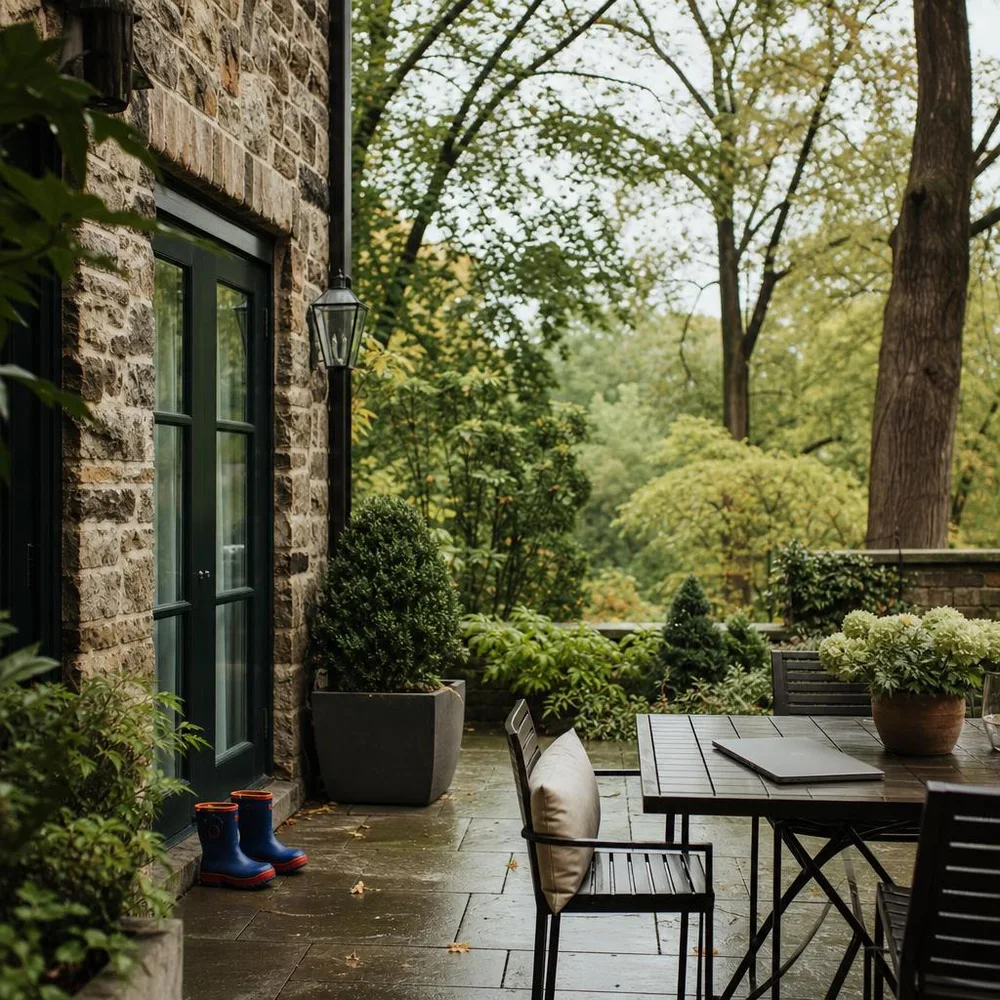
Families coming to Princeton for research visits, lab rotations, academic projects, or a temporary assignment often need housing that feels closer to a lived-in home than a short hotel stay. The practical challenge is not just finding a furnished place for a calendar month or longer; it is arranging a stay that works for adults who need a quiet workday base and children who need predictable routines, sleep, and supervision. In Princeton, that often means thinking beyond the campus core and into nearby neighborhoods and surrounding Central New Jersey communities where month-plus furnished housing is more likely to fit a family’s needs.
Start with the shape of the family stay, not the address
Before comparing neighborhoods, it helps to define the stay itself. A Princeton family visit is usually built around a research schedule, a partner’s hybrid work routine, visiting relatives, or a temporary assignment that has a known start date but an uncertain end date. is designed for calendar-month furnished stays and longer, so the key question is not whether a property can be booked for a few nights, but whether the written agreement fits the actual dates you need, including any extension possibility. February can be a full month in this context, and the agreement terms should match the real arrival and departure dates rather than a vague estimate.
 is designed for calendar-month furnished stays and longer, so the key question is not whether a property can be booked for a few nights, but whether the written agreement fits the actual dates you need, including any extension possibility. February can be a full month in this context, and the agreement terms should match the real arrival and departure dates rather than a vague estimate.
That matters because family travel creates overlaps that single-person stays do not. One adult may need a desk and reliable quiet during the day while another handles school-age activities, nap schedules, or meals. Separate sleeping spaces are often more important than a larger common area. A one-bedroom can work for some families with a child’s sleeping setup in the living room, but only if everyone understands the tradeoff: the evening routine may be more rigid, and the workday may require more coordination than in a two-bedroom or a layout with a den.
Princeton geography and the places families usually compare
Princeton itself is compact, but the practical monthly-rental search often reaches into nearby areas where families can find more room or a different street pattern. Around Princeton, people frequently compare settings near Princeton Borough, Princeton Township areas close to the university corridor, and surrounding Mercer County locations that still support an easy drive into the town center or research sites. The appeal is not just proximity; it is the mix of sidewalks, residential blocks, and access to everyday errands that can make a month-long family stay less stressful.
A family with a research schedule may also weigh whether the location supports daycare drop-offs, older-child pick-ups, grocery runs, and a daily rhythm that does not rely on a hotel lobby. In some cases, a quieter residential street outside the most intense campus-adjacent zone will feel better than being right next to the busiest pedestrian corridors. In others, being closer to Princeton’s central activity may reduce car dependence. There is no universally best location; the right answer depends on whether the family needs walkability, parking convenience, school-day logistics, or a calmer setting for evening routines.
Separate sleeping spaces: the first real design question
For visiting families, floor plan matters more than decor. Ask what the sleeping arrangement actually is, not what the photos suggest at a glance. A true second bedroom, a den with a door, or a living room that can be closed off for part of the evening can change the quality of the stay. If one parent is preparing for early meetings while a child needs a regular bedtime, the ability to separate sound and light becomes a functional issue rather than a comfort upgrade.
- Confirm how many separate sleeping zones exist and whether each one has a door, curtain, or other privacy boundary.
- Ask where a crib, pack-and-play, or extra bedding would actually fit without blocking circulation or emergency exits.
- Check whether the main bedroom and common areas can support two different schedules, such as early work calls and a later child bedtime.
- Verify whether the unit has enough storage for strollers, diaper supplies, luggage, and work materials during a multi-week stay.
This is where a month-long furnished rental differs from a short-stay hotel comparison. A hotel can solve a one- or two-night gap, but it rarely solves the family problem of ordinary routines over several weeks. is built for the longer stay category, so the tradeoff is often less daily service and more independence. Families should decide whether they want a place that functions like a temporary apartment, not a rotating room key.
Childcare logistics and the daily handoff problem
Childcare planning often determines whether a Princeton stay feels manageable or chaotic. The issue is not only who watches the children, but how the handoff works around research hours, meetings, and meal times. If one adult leaves early and returns late, the lodging needs a realistic indoor routine for the remaining caregiver. That means enough kitchen function for simple meals, space for a child to play safely, and a layout that does not require constant room changes to complete ordinary tasks.
Practical questions are often better than broad assumptions. Is there room to store a stroller by the entry? Is the kitchen usable for breakfast before an early departure? Is the bathroom setup workable when two adults are getting ready at once? Will the sleeping arrangement make midday naps possible if a young child’s schedule is still changing? These questions matter because a month-long visit is not just a place to sleep; it is the setting for school pickups, snack time, work calls, and the in-between hours that determine whether the stay runs smoothly.
For families depending on a sitter, relative, or local childcare provider, the most valuable housing may be the one that makes handoffs simple. That may mean a first-floor unit, easier parking, or a layout where a child can be supervised while an adult works at the table. It may also mean choosing a place that keeps the family close to the actual daily destinations rather than only to a prestigious zip code.
Workday routines for the visiting adult or partner
A Princeton research visit often includes a schedule that is more predictable than a vacation but less predictable than a standard office commute. Some days run long; some end early. The house or apartment therefore needs to support a workday that changes without disrupting the whole family. A closed bedroom can double as a conference-call room, but only if noise and room sharing are manageable. A dining table may work as a desk, but only if there is enough light and enough separation from children’s activities.
This is where the tradeoff between more space and better location becomes especially real. A larger unit slightly farther from the center may give the working adult the quiet needed for writing or remote meetings, while a smaller place closer in may reduce travel time but require stricter household coordination. Families should ask whether the stay is mostly about on-site research access, remote work continuity, or mixed schedules. The answer often changes which neighborhood is sensible, and it changes which floor plan is worth prioritizing.
Occupancy rules, agreement terms, and what to verify in writing
Family stays can raise occupancy questions that are easy to overlook if everyone focuses only on the furnishings. The right approach is to ask about the actual agreement terms before arrival, including who may stay overnight, how many people are allowed in the unit, whether infants count toward occupancy limits, and whether any special rules apply to guests or rotating caregivers. Because month-plus stays are based on written terms, these details should be clear before anyone commits to dates.
This is also the right time to ask about extension mechanics. If the initial month is likely to grow into six weeks or two months, do not assume the arrangement will simply continue informally. Ask what notice is needed, whether a written extension is required, and whether the end date can be adjusted without changing the entire stay plan. A family with children should not have to rebuild the housing plan halfway through a research trip because the end date was never confirmed.
- Verify the exact start and end dates in writing, including whether the stay covers a full calendar month or a different date range.
- Ask how extensions are handled if the research schedule changes.
- Confirm whether children, infants, and occasional visiting relatives fit the occupancy terms.
- Check any house rules about quiet hours, smoking, pets, parking, or use of shared outdoor space.
- Ask what furnishings are included so you know whether to bring a crib, booster seat, or desk chair.
For renters, the practical next step is to search monthly furnished options and then contact property providers directly through search. For owners who have a Princeton-area place that can work for a family on a calendar-month basis, list your place so potential guests can discuss the actual terms, not just the pictures.
Hypothetical household example: two adults, one child, one research month
For example, a hypothetical family arrives for a five-week Princeton research visit: one adult has daytime meetings near campus, the other is working remotely, and a seven-year-old needs a predictable bedtime and enough space for homework. They choose a furnished two-bedroom because the second room can serve as a quiet office at midday and a child’s room at night. They also ask whether the apartment has a real dining surface for laptop work, enough kitchen equipment for breakfast, and storage for a stroller and a suitcase or two.
In this hypothetical, the family’s decision is not driven by prestige or by the shortest drive alone. It is driven by whether the housing can hold the family’s daily rhythm. That is often the best way to think about Princeton monthly family stays: not as a hotel substitute, but as a temporary household arrangement that should reduce friction rather than create it.
A practical decision framework for families
Use this framework when comparing Princeton monthly stays:
- Need first: Decide whether your non-negotiables are a second bedroom, a quieter work area, easier parking, or proximity to a specific Princeton destination.
- Schedule fit: Match the written dates to the real research timeline and decide how likely an extension is.
- Routine fit: Check whether meals, naps, school-age work, and conference calls can all happen without constant rearranging.
- Occupancy fit: Confirm that everyone who may sleep there fits the written agreement terms.
- Tradeoff check: Decide whether you would rather have more space slightly farther out or less space in a more central location.
If the unit fails one of these core categories, it may still work as a stopgap, but it is probably not the best month-plus solution for a family. If it clears all five, the stay is much more likely to support both work and home life.
Arrival checklist for a smoother first week
Before arrival, confirm these items so the first week does not become a scramble:
- Written arrival and departure dates, plus extension contact information.
- Sleeping setup for every family member, including bedding needs for children.
- Kitchen basics for breakfast, lunch, and simple dinners.
- Laundry access and where to store dirty clothes, outerwear, and kids’ gear.
- Wi-Fi and a work surface that are suitable for the adult who needs to work.
- Parking, entry instructions, and any rules about visitors or quiet hours.
- A plan for packages, childcare supplies, and emergency contact numbers.
Princeton can be an excellent base for a family whose visit revolves around research work, but only when the housing arrangement is treated as a real household plan. Separate sleeping spaces, childcare logistics, workday routines, and written occupancy terms matter more than glossy photos or a familiar town name. If you build the stay around those practical details, the month becomes easier to live in, not just easier to list.
For readers comparing this guide with broader New Jersey context, the older guide at furnished monthly rentals in New Jersey can help frame the state-wide search, while this Princeton-focused article is better suited to the specific realities of a family visiting for research work.
Make your next month feel more settled.
Related reading

Jersey City Hybrid Work: PATH Days and Home Days
How Jersey City hybrid workers can match PATH schedules, alerts, and home-day needs to a monthly stay without over- or under-committing.

A relocation checklist for your temporary home
A steady, step-by-step plan for finding a place, organizing arrival and making the first few days in a new city less hectic.