Lawrence Visiting Scholars: A Calm Monthly Home Base
Plan a Lawrence monthly home base with desk quality, quiet hours, reference access, and household routines in mind, without assuming university access.
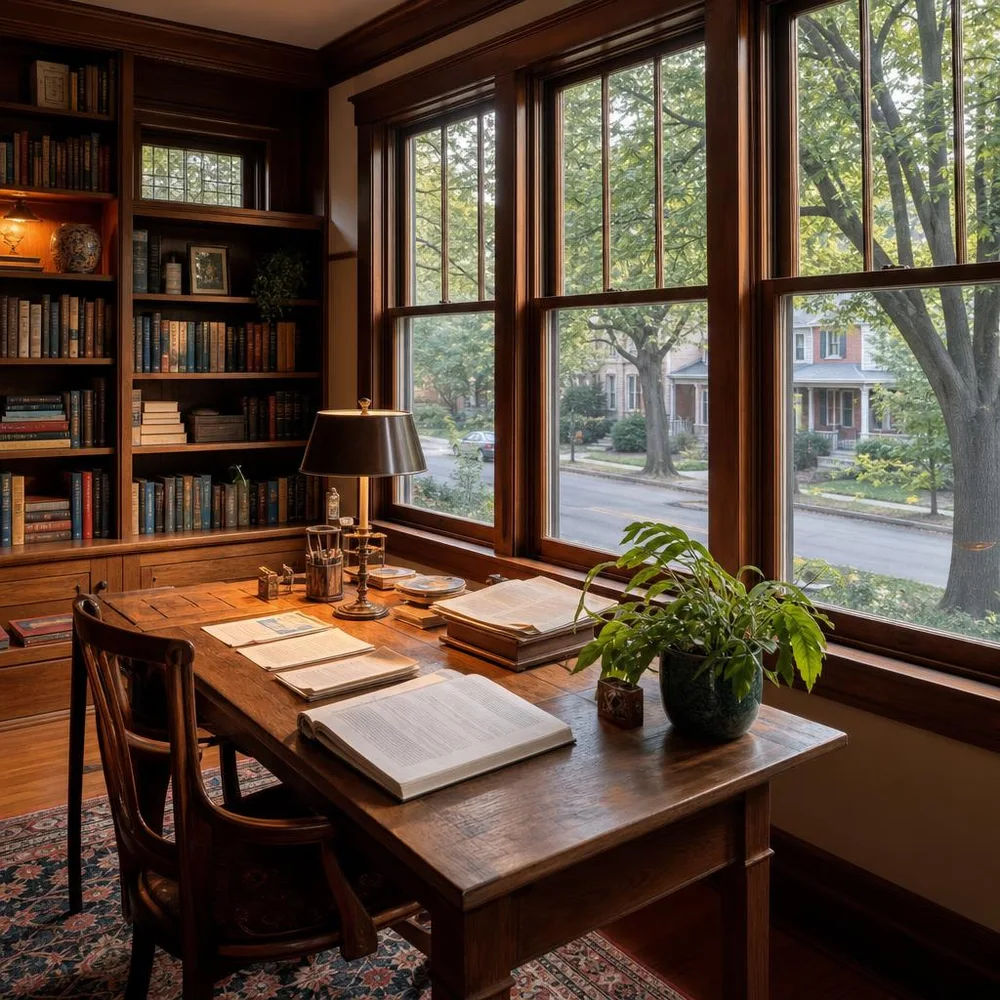
A Lawrence research visit works best when the place you choose supports long reading days, irregular writing hours, and the ordinary household habits that shape concentration. For a visiting scholar, the question is not simply where to sleep. It is where to keep books open, spread out notes, take calls without disturbing others, and return after a day in archives, libraries, or meetings with enough calm to think clearly. Month-long furnished housing can serve that purpose well, but only if the agreement, the room layout, and the household rhythm actually fit the work ahead.
Monthly housing is a work setting, not a hotel substitute
A calendar-month furnished stay is different from a short-stay lodging arrangement. A hotel or other night-by-night option may suit a very brief research trip, but it usually does not provide the same desk setup, kitchen routine, laundry rhythm, or settled atmosphere that many scholars want for a month or longer. In Lawrence, that distinction matters because a longer visit often includes repeated trips between your lodging and the areas where you do your work, whether that means campus-adjacent neighborhoods, downtown reading spots, or quieter residential streets on the city’s west and south sides. The right monthly home base should help you maintain a daily pattern rather than forcing you to reset every few days.
This is also why exact dates matter. February can be a full month, and a monthly agreement may begin and end on specific calendar dates rather than being treated as a generic 30-day stay. If your visit extends, written renewal terms matter. If you need an extra week for revisions, confirm how that extension is handled before you arrive. is built for calendar-month furnished stays and longer arrangements, not for nightly bookings, so the key question is whether the property provider can match your actual research timeline and household needs.
 is built for calendar-month furnished stays and longer arrangements, not for nightly bookings, so the key question is whether the property provider can match your actual research timeline and household needs.
Where Lawrence geography changes the feel of a stay
Lawrence has a compact enough scale that location choices can still feel meaningful. Downtown Lawrence offers easy access to cafés, shops, and a dense street grid that can be convenient if your day includes meetings or scattered errands. The University of Kansas area can be attractive for scholars who want to be near academic life, but proximity alone should not be mistaken for access to university housing, university services, or special privileges. A furnished home base near Massachusetts Street, Old West Lawrence, Brook Creek, or farther west toward quieter residential blocks may offer a different kind of concentration than a more active corridor near busier commercial areas.
Think about the soundscape as much as the map. A unit near a lively commercial stretch may be fine if you work best with ambient activity, while a side street with a detached feel may better support long reading sessions. In Lawrence, trees, older homes, and neighborhood-scale blocks can create a calmer daily rhythm than a heavily trafficked frontage road. The best choice depends less on prestige and more on whether the place lets your writing life become predictable.
Desk quality and reference access are not minor details
For a visiting scholar, desk quality can determine whether a furnished stay is truly usable. A desk should be large enough for a laptop, notebook, and a working stack of books or printouts without requiring constant cleanup. Chair comfort matters too, but so does surface height, lighting, and the ability to keep materials arranged in a stable way for several weeks. A desk in a bedroom corner may work if the room is quiet and the chair is adequate; it may fail if the only place to sit is beside a noisy vent or under dim lighting.
Reference access deserves the same attention. Some scholars depend on local libraries, archives, or their own shipped materials; others need a quiet place to scan articles and annotate drafts. Ask whether the property has reliable internet, enough table space for multiple documents, and storage for books or folders. It is reasonable to ask about a second chair for a reading corner, or whether there is a dining table that can double as a larger research surface. Month-long living often succeeds or fails on these practical details rather than on decor.
Quiet hours and household routines shape the real workday
Monthly lodging for research is not only about your own habits. It is also about how those habits fit with a household member’s routine, especially if you are sharing space with one or more other residents. If a household wakes early, cooks late, or uses a common area frequently, that can affect your own writing schedule. The right question is not whether the space is quiet in the abstract, but when quiet happens and how consistently it is respected.
Before agreeing to a stay, ask about likely noise patterns, shared kitchen use, laundry timing, pets, visitors, and whether there are parts of the day when the common areas are naturally calmer. A scholar who writes late at night may need a place where thin walls or hallway traffic will not become a nightly interruption. Another visitor may prefer early mornings and be comfortable with more evening activity. The goal is a realistic fit, not a perfect one. If the household has a routine that conflicts with your own, it is better to know that now than after you have unpacked your research notes.
A hypothetical household example
For example, a hypothetical visiting professor plans a six-week stay in Lawrence while revising a manuscript and meeting a collaborator once a week. The professor needs a desk near a window, a quiet block after 9 p.m., and a kitchen that allows simple breakfasts before an early start. The property provider says the apartment has a separate work table, a strong internet connection, and limited evening noise because the building is on a residential street. That sounds promising, but the professor also learns that the household shares one washer and that the common room is used for family dinners several nights a week. In that case, the stay may still work well if the professor can keep most materials in the bedroom and reserve the common room for daylight hours. If the evenings are the only time available for focused reading, the same arrangement may be a poor fit.
How to choose between a few plausible options
A practical decision framework can keep the choice grounded. First, identify your nonnegotiables: desk size, quiet hours, kitchen access, and the length of the written agreement. Second, decide what is flexible: neighborhood character, parking setup, whether the workspace is separate from the bedroom, or whether you can tolerate some household activity. Third, compare each option against your actual work pattern. A scholar who spends most weekdays in archives may need less in-home workspace than someone who drafts all day. Fourth, check the extension process. If your visit may expand, it is far easier to negotiate terms up front than to improvise later.
Use this framework to separate meaningful tradeoffs from cosmetic features. A beautiful living room may not matter if the desk is cramped. A quiet street may not matter if the internet is unreliable for your work. A large kitchen may not matter if you rarely cook. The best monthly stay is the one that supports the habits your research actually requires.
What to confirm before you agree to a stay
- The exact start and end dates in the written agreement, including whether your visit begins on the first of a month or on a mid-month date.
- How extensions are handled if your research takes longer than planned, and whether the terms must be renewed in writing.
- The desk setup: size, chair, lighting, and whether there is room for papers, books, and a laptop at the same time.
- Quiet hours, shared-space routines, and any expected household activity that might affect your work schedule.
- Internet reliability, kitchen access, laundry arrangements, and whether storage space is available for research materials.
- Whether parking, if needed, is on-site, street-based, or otherwise limited by the property’s location.
- How keys, arrival timing, and move-in coordination are handled so the first day is usable rather than chaotic.
If you want to compare furnished monthly stays in the area, the search page can help you contact property providers who handle calendar-month arrangements: search furnished monthly stays. For owners who want to offer a scholar-friendly place for a month or longer, the listing page explains how to present a furnished stay to monthly renters: list your place.
Arrival details that make the first week smoother
A thoughtful arrival plan can save a week of friction. Confirm how you will get in, where you will set down bags, and whether the workspace is already ready for use. Ask where linens, basic cookware, trash sorting, and extra light sources are kept. If you are bringing books or a monitor, check whether there is a clear place to unpack them immediately. If your stay involves a household member with a set routine, ask when the most convenient arrival window is so the first evening does not collide with dinner, school pickup, or another recurring activity.
- Review the written dates, payment terms, and extension process before arrival.
- Confirm the workspace location and whether a lamp, chair, or table adjustment is needed.
- Ask about the calmest hours for reading or calls.
- Learn the kitchen, laundry, and trash routines on day one.
- Store research materials in one place so the space becomes workable quickly.
- Keep contact information for the property provider in case a practical question comes up after arrival.
Kansas weather can also shape a research visit, especially when you are moving books, electronics, or files between your lodging and other locations. If your stay overlaps with a season of volatile weather, it is wise to check current forecasts from weather.gov and to think through basic readiness with a source such as ready.gov. Those sites are for planning, not for making assumptions about any specific property.
Lawrence works best when the stay matches the task
A successful Lawrence monthly stay is not defined by style alone. It is defined by whether the lodging supports your actual scholarly routine: sustained writing, steady access to references, quiet enough hours to think, and enough household compatibility that daily life does not erode concentration. If the space is near the parts of Lawrence you need, if the desk is genuinely usable, and if the agreement reflects the real length of your visit, the month can feel organized instead of improvised. That is the real measure for a visiting scholar: not just a place to stay, but a calm home base that lets the work continue.
For broader context on furnished monthly rentals in Kansas, the older state guide at Furnished Monthly Rentals in Kansas can help frame how monthly stays differ from short visits and what to ask before you commit. The Lawrence choice then becomes more specific: not simply Kansas, but the right desk, the right quiet, and the right rhythm for the month you actually need.
Make your next month feel more settled.
Related reading

Wichita Owners: Explain Aircraft Noise Honestly
How Wichita owners should describe aircraft noise plainly, use local airport facts, and help monthly-stay guests choose well without overpromising.

A relocation checklist for your temporary home
A steady, step-by-step plan for finding a place, organizing arrival and making the first few days in a new city less hectic.