Tucson Courtyard Rentals: Private or Shared Space?
How to judge a Tucson furnished casita’s courtyard, entrance, noise boundaries, and outdoor rules before choosing a calendar-month stay.
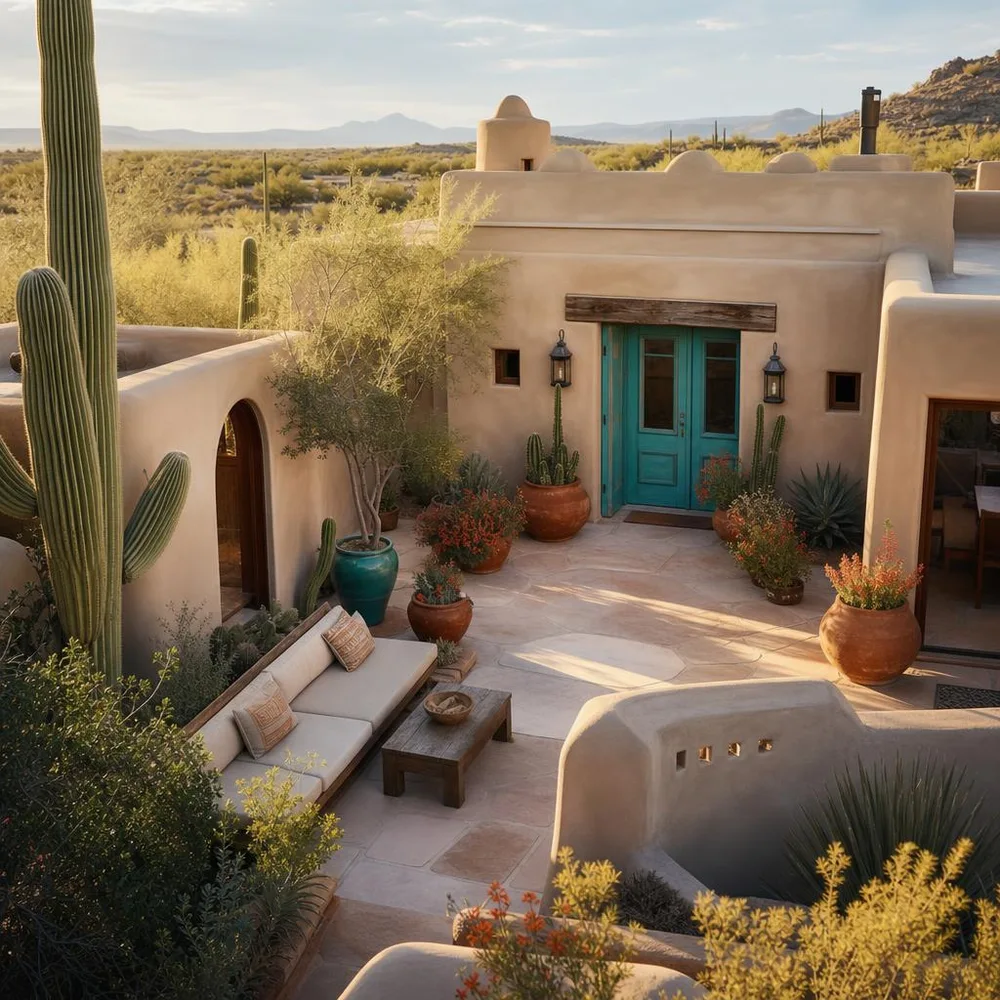
A Tucson furnished casita can look ideal in photographs: adobe walls, a shaded patio, a turquoise door, maybe a string of lights over a brick courtyard. For a calendar-month stay, though, the question is not whether the space feels “Southwestern.” It is whether the courtyard is genuinely part of your usable living area, how private it is, and what the day-to-day rules are for stepping outside, hosting someone, or moving between the unit and the main house. In a month-long arrangement, those details matter as much as the bedroom and kitchen, because outdoor space often becomes your second living room in Tucson’s climate.
The courtyard can be the difference between spacious and exposed
In Tucson, a courtyard often does more than decorate a property. It can provide shade, filter dust, create a place for breakfast or work calls, and soften the transition between indoor and outdoor living. But a courtyard on a listing can mean very different things. It may be fully fenced and reserved for the monthly guest, it may be shared with the owner or another unit, or it may be visible from your windows but not really usable for sitting, dining, or storing anything. For a month or longer, that distinction should be confirmed before you agree to the stay, not after arrival.
A useful first question is simple: Is the courtyard private, shared, or visually private but functionally shared? That wording encourages specifics. Ask whether you would have sole use of the courtyard at all times, whether the owner crosses it to access another area, whether pets or landscaping staff enter, and whether there are any quiet-hour limits that affect outdoor use. The answers can change how the space feels at 7 a.m., at midday, and at night.
Separate entrance is helpful, but not enough by itself
A separate entrance is often a strong sign that a Tucson casita works better for a monthly stay than a room inside a larger home. It can give you a clearer boundary between your routine and someone else’s. Still, a separate door does not automatically mean privacy in practice. The path to that door may pass through a shared courtyard, or the entrance may open onto a space that is also used for gardening, maintenance, or access to another residence.
When comparing options on search, look beyond the phrase “private entrance.” Ask whether the entrance is directly from a street, a side yard, a courtyard, or a common walkway. Then ask how secure and exclusive the route is after dark, whether deliveries come to your door, and whether any gate codes, locks, or lighting are part of the arrangement. For an outdoor-centered stay, the route matters almost as much as the door itself.
 search
Noise boundaries in a courtyard setting
Noise is one of the most overlooked parts of a courtyard rental. Walls may block street sound, but they can also bounce voices, music, appliance noise, and footsteps in ways that make a small outdoor area feel less private than it appears in photos. In Tucson, where many casitas use hard surfaces such as stucco, tile, concrete, or stone, sound can carry differently than in a more enclosed apartment.
You do not need to assume a courtyard is noisy; you need to ask where the boundaries are. Is there a quiet expectation for outdoor use after a certain hour? Are there neighboring windows that face the courtyard? Is the owner’s home close enough that conversations outside are easily heard? Are dogs, fountains, grills, or HVAC equipment nearby? These are not trivial questions for a month-long stay, because the difference between “pleasantly open” and “acoustically exposed” can affect sleep, work calls, and whether you actually use the space.
Outdoor-use rules should be written, not guessed
Outdoor space is often where confusion begins. A furnished casita may include a courtyard, but that does not automatically mean you can use it for every purpose you imagine. Some properties allow dining but not smoking. Some allow morning coffee and quiet reading but not visitors. Some permit a small table and chairs but not additional furniture. Some ask guests to keep gates closed or to avoid certain plant beds, storage areas, or decorative features. None of this is unusual; it simply needs to be spelled out.
For a monthly stay, written terms matter. If the courtyard is meant to be part of your home base, check whether the agreement addresses these points:
- Whether the courtyard is private, shared, or access-controlled, and whether that status changes at any time
- Whether outdoor furniture, umbrellas, grills, candles, or stored items are allowed
- Whether quiet hours apply outdoors as well as indoors, and whether visitors may use the space
- Whether pets, smoking, watering routines, or maintenance visits affect your access to the courtyard
If the rules are vague, ask for a written clarification before the stay begins. is designed for calendar-month and longer furnished stays, not nightly bookings, so the actual agreement dates and any written extension terms matter. February can be a full-month stay. A stay is not “about 30 days” by default; the start and end dates should be explicit and should match the contract you accept.
Scenic photographs can overstate usable outdoor space
A Tucson courtyard can photograph beautifully and still be difficult to use. A wide-angle overhead shot may make a space look large when it is actually narrow. A turquoise doorway may suggest openness when the usable seating area is limited to one chair. Soft saguaro shadows may convey a desert mood without telling you whether the courtyard gets afternoon heat, direct sun, or wind. That does not mean the photo is misleading; it means photos are not the same as use rights.
When reviewing photos, separate style from function. Ask yourself: Can I see a place to sit for more than a few minutes? Is there shade during the hours I care about? Is the ground surface comfortable for luggage, bare feet, or a laptop chair? Does the courtyard appear enclosed enough for privacy, or merely picturesque from one angle? If a space looks charming but you cannot tell where you would actually spend time, the listing still needs more explanation.
A practical decision framework for Tucson courtyard stays
Use this framework to compare two or three furnished casitas before choosing one. It is especially helpful when one property has a strong indoor layout but a vague courtyard, while another has a simpler interior and a clearly defined outdoor space.
- Privacy: Is the courtyard exclusively yours, or only partly yours? Who can enter it, and when?
- Access: Is the entrance separate in a practical sense, with easy arrival, lighting, and secure closure?
- Usefulness: Can you really sit, eat, read, work, or relax there comfortably during your stay?
- Sound: Are there likely noise carry points from neighbors, maintenance, pets, or shared walls?
- Rules: Are the outdoor-use terms written clearly enough that you can follow them without guesswork?
A property scores better for a monthly guest when the courtyard is both attractive and workable. If you can answer those five questions with confidence, you are closer to a good fit. If you can answer only one or two, you may be looking at a pretty backdrop rather than a livable outdoor extension of the home.
Hypothetical household example: when the courtyard changes the whole stay
For example, a hypothetical couple plans a six-week Tucson stay. One partner works remotely and needs a quiet outdoor place for lunch and phone calls; the other wants morning coffee in the shade and room for a visiting friend to stop by once a week. They are considering two furnished casitas. The first has a private entrance but a courtyard that is shared with the owner’s laundry path. The second has a smaller courtyard but it is fully fenced, separately entered, and governed by clear written outdoor-use terms.
Even though the first property looks larger in photos, the second may suit them better because the use pattern is clearer. They do not need a large courtyard if they cannot predict who crosses it or when. That is the key tradeoff in Tucson courtyard rentals: size and scenery matter, but boundary clarity can matter more.
Short-stay alternatives versus monthly furnished living
If you only need a few nights, a hotel or short-stay lodging may be easier because the expectations are simpler: you are paying for temporary accommodation, and you usually are not negotiating courtyard use as part of a home-like month-long setup. But for a calendar-month stay, the value of a furnished casita is often in the autonomy, kitchen access, and outdoor space that can make Tucson feel livable rather than merely visited. The tradeoff is that more autonomy usually means more to confirm in writing.
If you are an owner comparing how to present a monthly stay, list your place with the courtyard terms plainly stated. A guest deciding on a month-long stay should not have to infer whether the outdoor area is private, shared, or decorative. Clear language helps both sides avoid misunderstandings once the stay begins.
Arrival and agreement checklist for a Tucson casita courtyard
Before arrival, confirm the basics in writing and save them with your agreement. This checklist is especially useful when the courtyard is a major part of why you chose the property.
- Exact start and end dates, plus any written option to extend if both sides agree later
- Whether the courtyard is private, shared, or access-limited, and who may enter it
- Any rules for outdoor dining, guests, smoking, pets, grills, candles, or storage
- Quiet hours or noise expectations that apply outdoors as well as indoors
- How you will access the property, where you park if relevant, and whether gates or lights are provided
- Who handles landscaping, watering, trash, or maintenance in the courtyard area
- What to do if the courtyard photos do not match the usable space described in the agreement
If you want broader context on Arizona furnished monthly stays, the older guide at furnished monthly rentals in Arizona can help with state-level planning, while this Tucson-specific question remains focused on the courtyard itself. For weather-sensitive planning around outdoor use, official guidance from weather.gov can be useful for checking heat, monsoon timing, or wind conditions, but you still need the property’s own written terms to know how the space may be used.
In the end, the best Tucson courtyard rental is not just the one with the most photogenic adobe walls. It is the one where the separate entrance, noise boundaries, and outdoor-use rules are clear enough that the courtyard becomes part of your daily life instead of a source of guesswork.
Make your next month feel more settled.
Related reading
Phoenix Summer Stays: Cooling and Utility Questions
Phoenix summer stays often hinge on cooling costs and thermostat control; this guide helps renters and hosts ask the right utility questions.

A relocation checklist for your temporary home
A steady, step-by-step plan for finding a place, organizing arrival and making the first few days in a new city less hectic.